São Bernardino de Sena Convent, 18th-century Franciscan convent in Angra dos Reis, Brazil.
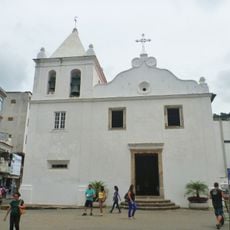
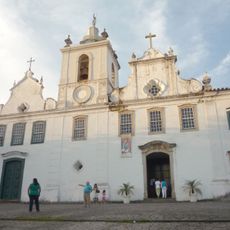
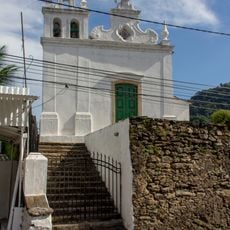
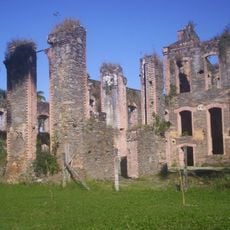
The São Bernardino de Sena Convent occupies Santo Antonio Hill and displays colonial architecture featuring a three-arch entrance gateway and preserved stone walls from former monastic buildings. The layout connects the Church of São Francisco with the remains of the friars' living quarters.
The Franciscans arrived in Angra dos Reis in the early 17th century and built a first convent from 1652 on donated land near the village, inaugurated on 12 September 1659. Bombarded by the forces of French corsair Jean-François Duclerc in 1710, it stood on damp, flood-prone ground, so in 1722 the friars decided to rebuild higher on the hill. Work began in 1758 under Father Provincial Frei Francisco da Purificação and the new convent was inaugurated on 20 May 1763 by Frei Manuel da Encarnação, who moved the 25 friars there.
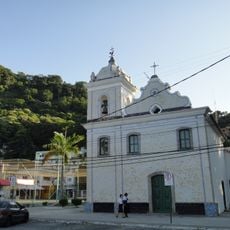
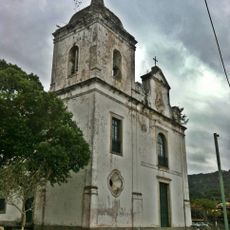
The convent church, with its three-arch galilé and baroque scrolled pediment, stopped hosting Masses in 1927; a popular movement led by historian Alípio Mendes secured its restoration in 1964, and it was restored again in the 1980s. Beside it stands the smaller Church of the Third Order of São Francisco, kept in good condition by the brotherhood.
The complex stands on Santo Antônio hill, reached on foot; the convent itself is in ruins while the smaller Church of the Ordem Terceira de São Francisco beside it is kept in good condition by the brotherhood. The conventual church stopped hosting masses in 1927 and was restored in the 1980s, so check locally before planning a visit inside. The set has been listed by IPHAN since 1947.
The stone cross standing before the convent was donated by King José I of Portugal, who also gave the sacristy's baptismal font. The cross is not marble but stonework, and it marks the forecourt of the ruined complex rather than the entrance to a neighbourhood.
The community of curious travelers
AroundUs brings together thousands of curated places, local tips, and hidden gems, enriched daily by 92,790 contributors worldwide.