Mário Xavier National Forest, National forest in Seropédica, Rio de Janeiro, Brazil
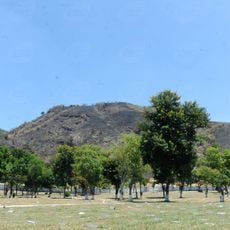
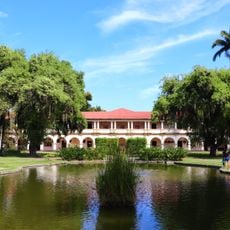
Mário Xavier National Forest covers about 493 hectares of the Baixada de Sepetiba, on nearly flat ground with low half-orange shaped undulations. It holds the most significant native forest fragment in Seropédica, crossed by two perennial streams, the Valão da Draga and the Vala dos Bois. Part of its area was cleared for the Metropolitan Arch. The CETAS wildlife screening centre also operates on the site.
The forest was established in 1986 through government action as a protected area to safeguard local biodiversity. This decision aimed to prevent the forest from being cleared for development and to keep it available for future generations.
The forest functions as a place where visitors encounter conservation efforts and learn about Atlantic Forest ecology through direct experience. It shows how communities work to protect the natural world within an urban region.
The forest is located near a main road and is open to visitors who can walk on trails and join environmental activities. It is helpful to check in advance what areas are available and what kinds of activities are being offered.
The frog Physalaemus soaresi was discovered and named in this forest by a researcher who noted its call carries about a hundred metres; it is known from nowhere else. When the Metropolitan Arch highway was routed across the forest, works were halted over its habitat. Around 30 amphibian species live here.
The community of curious travelers
AroundUs brings together thousands of curated places, local tips, and hidden gems, enriched daily by 93,642 contributors worldwide.