Copacabana Beach, Beach area in Rio de Janeiro, Brazil
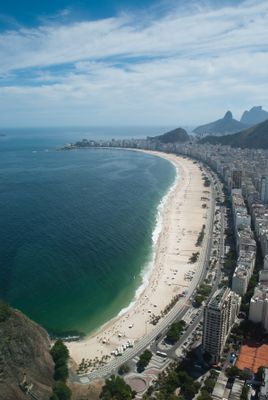
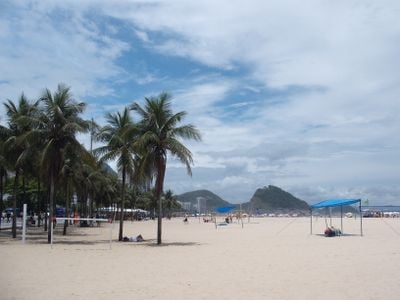
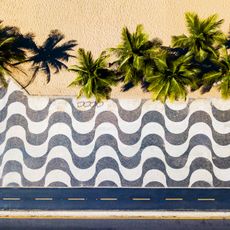
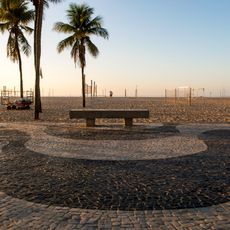
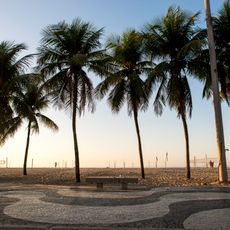
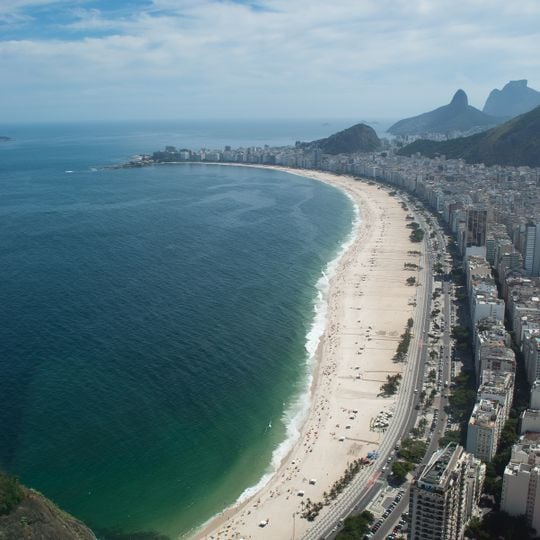
Copacabana Beach is a 4.5 km crescent of pale sand in Rio de Janeiro's South Zone, running from Leme to the Arpoador rock and bordered by Avenida Atlântica. Its promenade, the calçadão, is paved with black and white Portuguese stone in a wave pattern laid out under Roberto Burle Marx in the 1970s. The Copacabana Palace hotel stands opposite the sand, and the Forte de Copacabana closes the southern end.
The area shifted from a fishing village to a busy neighborhood in the late 19th century after Tunel Velho connected it to central Rio. Avenida Atlantica developed in the following decades, bringing hotels and residential buildings along the shore.
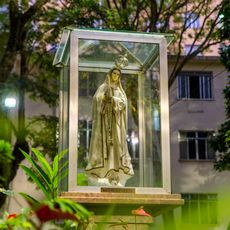
The beach's name comes from a hermitage dedicated to Our Lady of Copacabana, built in the 18th century on a rock at its southern end; the earlier Tupi name Sacopenapã referred to the noise of socó birds' wings. On New Year's Eve, crowds dressed in white gather on the sand and throw flowers into the ocean at midnight. The calçadão's black-and-white wave mosaic, redesigned under Roberto Burle Marx in the 1970s, runs along Avenida Atlântica.
Three metro stations provide access from the rest of the city, and kiosks along the promenade rent umbrellas and beach chairs. Early morning hours work well for a walk, while afternoons draw more visitors and vendors.
On New Year's Eve, around 2 million people come together to watch fireworks and attend concerts, making it one of the largest gatherings worldwide. Many visitors wear white clothing and throw flowers into the sea following local tradition.
The community of curious travelers
AroundUs brings together thousands of curated places, local tips, and hidden gems, enriched daily by 92,850 contributors worldwide.