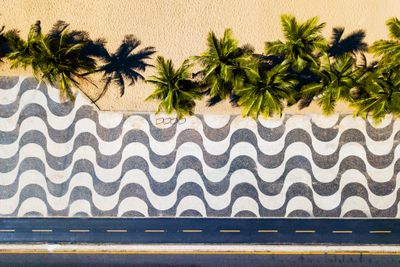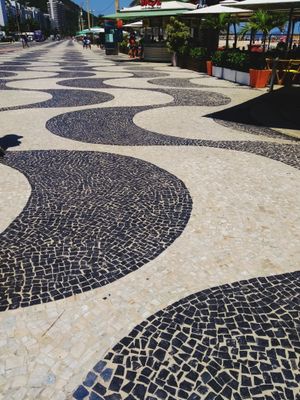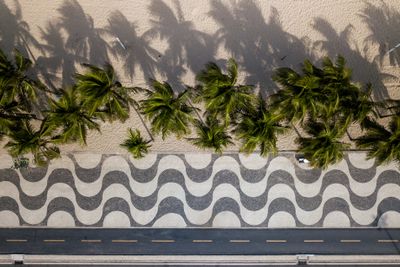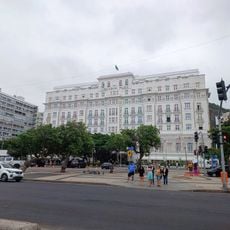
Piso de Pedra Portuguesa Mosaico de Burle Marx de Copacabana, Beachfront mosaic promenade in Copacabana, Brazil
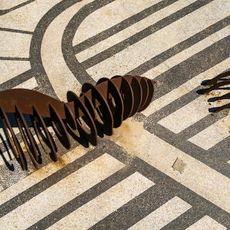
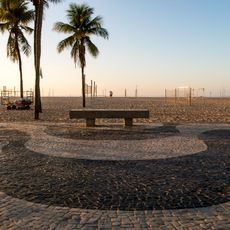
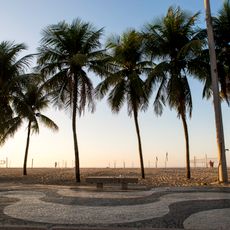
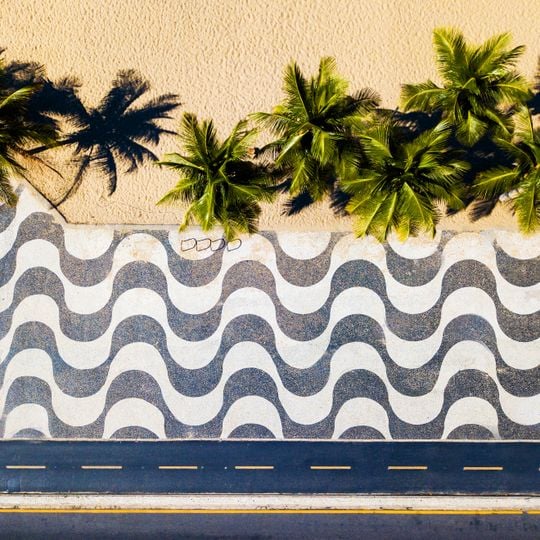
The Piso de Pedra Portuguesa is a mosaic floor made of thousands of black and white stones that covers the Copacabana promenade along Avenida Atlantica. The waves stretch for four kilometers from Forte de Copacabana to Leme, forming a continuous line parallel to the sea.
The wave pattern was created by engineer Pinheiro Furtado in Portugal in the early 19th century for Lisbon's Rossio square, representing the meeting of the Tagus river and the ocean. The Portuguese stone pavement was first laid in Brazil in Manaus in 1899 and inaugurated in 1900, later inspiring Copacabana's promenade in 1906, which symbolized the sea waves. In the 1970s, Roberto Burle Marx was invited to modernize the layout, turning the waves from perpendicular to parallel to the beach. The promenade was listed as cultural heritage by INEPAC in 1991.
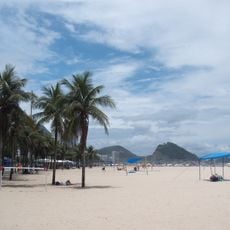
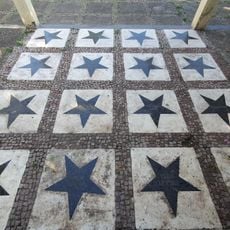
The pattern is called "mar largo", a reference to the open sea, and the black, white and red Portuguese stones are said to stand for the three ethnic groups that formed the Brazilian people. The stones were brought from Portugal. Coconut palms line the surrounding landscape.
You can walk or cycle across the mosaic at any time, as it is a public walkway with no restrictions. Early morning or late afternoon offers the best view of the pattern, when light enhances the contrast between the stones.
The stones were laid so rainwater drains through the joints, keeping the surface dry even during heavy rain. Children often play hopping games on the white lines, while adults use the waves as a running track.
The community of curious travelers
AroundUs brings together thousands of curated places, local tips, and hidden gems, enriched daily by 92,784 contributors worldwide.