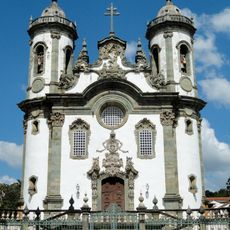
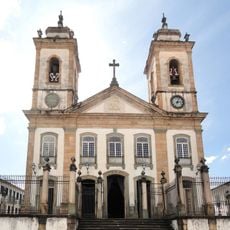
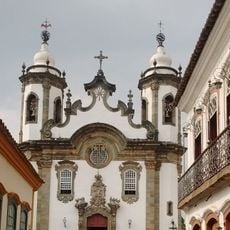
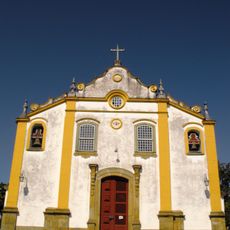
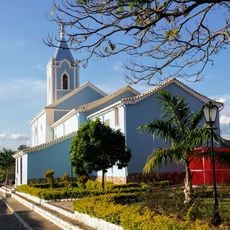
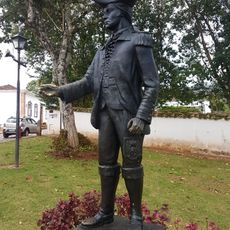
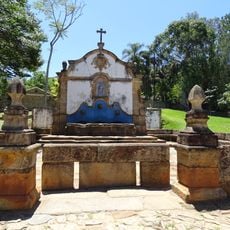
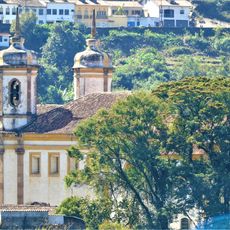
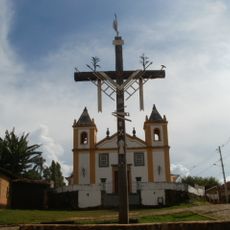
Church of Our Lady of the Rosary, Portuguese colonial church in Tiradentes, Brazil.
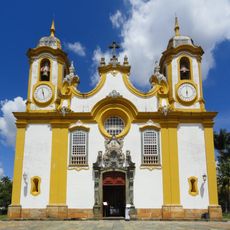
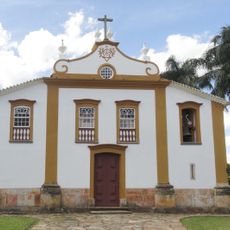
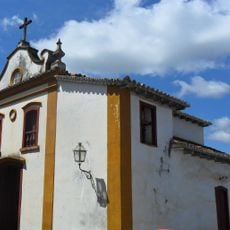
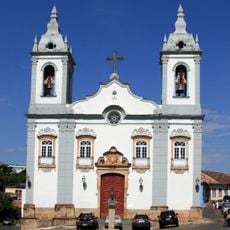
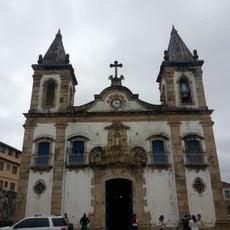
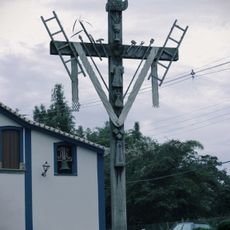
The Church of Our Lady of the Rosary is a complete single-nave church with a chapel, sacristies and side rooms, built in yellow sandstone ashlar. Its asymmetric facade has one central door framed in carved stone, a niche with a statue of Saint Benedict, an oculus and a stone cross. The interior ceiling holds eighteen painted panels.
The church is linked to the Irmandade de Nossa Senhora do Rosário dos Homens Pretos of the old Vila de São José. A chapel dedicated to the Rosary is recorded in the first half of the 18th century, but lost early records leave the start and end of construction uncertain; the present building is usually placed between the mid-18th century and its third quarter. Its 1795 compromisso admitted enslaved and free members, men and women. It was listed by IPHAN on 6 December 1949.
The brotherhood's 1795 commitment admitted men and women, enslaved and free, with members recorded under origins such as Benguela, Congo, Angola, Cabinda and Mina. Devotion extended beyond the Rosary to São Benedito, Santo Antônio do Noto, São Brás, Santo Elesbão and Santa Efigênia; a statue of São Benedito stands in the facade niche.
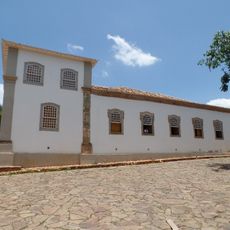
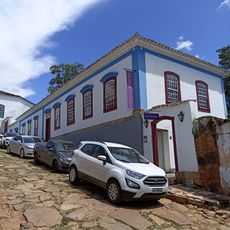
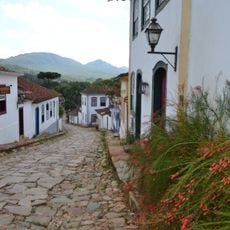
The church stands on Rua Direita, in the historic centre of Tiradentes, and is reached on foot along the town's cobbled streets. Visitors enter through the single central doorway framed in yellow sandstone; the facade faces the street, with the bell tower volume on the left and the lower annex on the right.
The nave ceiling holds eighteen painted panels: fifteen depict the Joyful, Sorrowful and Glorious Mysteries of the Rosary, three show Marian invocations from the Litany of Loreto. Painted probably in the early 19th century, the set is attributed to Manoel Victor de Jesus, a member of the brotherhood himself.
The community of curious travelers
AroundUs brings together thousands of curated places, local tips, and hidden gems, enriched daily by 92,841 contributors worldwide.