Forte de São José da Barra do Rio Negro, Portuguese fortress at the Rio Negro riverbank in Manaus, Brazil
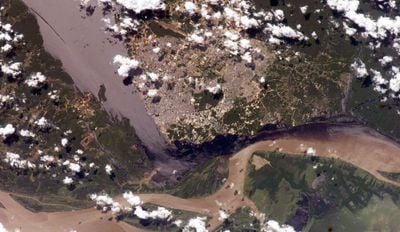
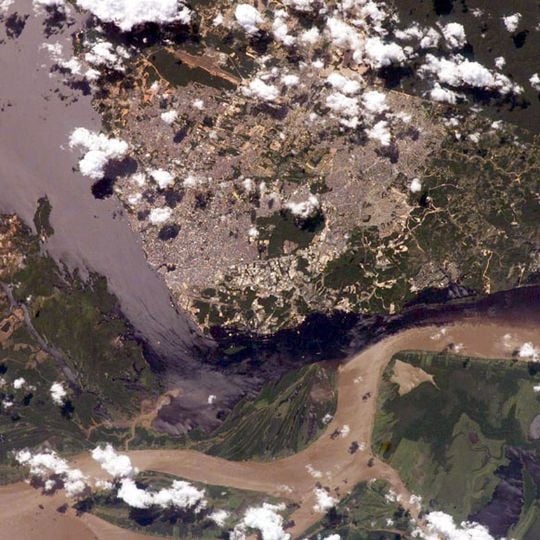
The Forte de São José da Barra do Rio Negro was a small quadrangular fortification, probably built of wattle-and-daub and earth, without a moat, on the left bank of the Rio Negro near its confluence with the Solimões. It mounted four artillery pieces of 3- and 1-pounder calibres and had a garrison of 270 men, from which detachments were sent to other forts and presidios of the Rio Negro, Branco, Solimões and Içá rivers.
Scholars disagree on the fort's origin, proposing dates between 1667 and 1697. It was one of four stockades ordered built by governor Antônio de Albuquerque Coelho de Carvalho and erected by captain Francisco da Mota Falcão, then finished by his son Manuel da Mota Siqueira. In 1755 governor Joaquim de Melo e Póvoas improved it, and it was disarmed in 1783.
The settlement that grew beside the fort, the "logar da Barra", became the seat of the Capitania de São José do Rio Negro in 1791 and was raised to Vila da Barra do Rio Negro on 29 March 1808. In 1850 it became the capital of the Province of Amazonas under the name Manaus.
Nothing of the fort stands today; the site lies in Manaus, on the left bank of the Rio Negro just above its meeting with the Solimões. The settlement that grew at its foot, the "logar da Barra", became the seat of the Capitania de São José do Rio Negro in 1791 and was raised to Vila da Barra do Rio Negro on 29 March 1808. In 1850 that village became the capital Manaus.
The fort was a simple earth-and-brushwood stockade, not a stone castle: a quadrangular plan without a moat, armed with four guns of 3- and 1-pounder calibres. Its garrison of 270 men supplied detachments for the forts and presidios of the Negro, Branco, Solimões and Içá rivers and for the registry posts on the Madeira. Its first commander was Captain Ângelo de Barros.
The community of curious travelers
AroundUs brings together thousands of curated places, local tips, and hidden gems, enriched daily by 92,804 contributors worldwide.