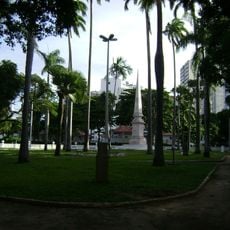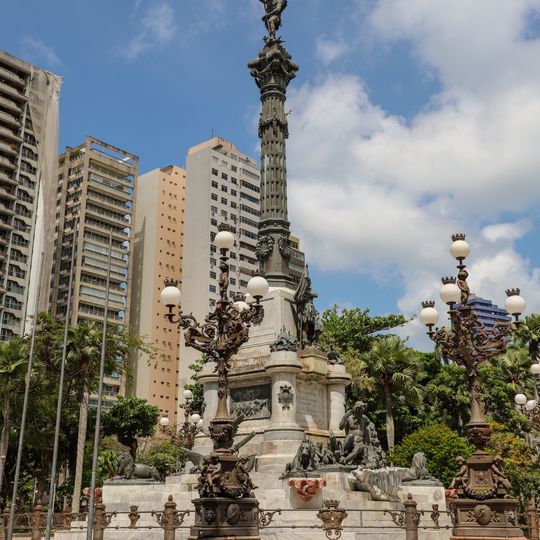
Monumento ao Dois de Julho, Independence monument in Campo Grande Square, Salvador, Brazil
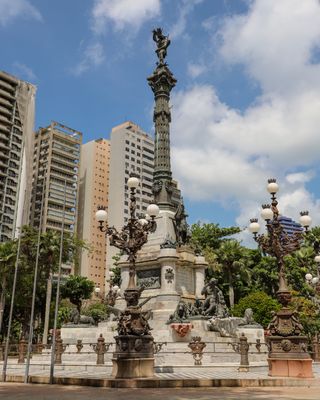
Monumento ao Caboclo is a monument in Campo Grande Square in Salvador featuring a bronze Corinthian column on a Carrara marble pedestal with cast iron structural elements. Sculptural figures adorning the base tell the story of important battles and resistance against colonial power.
Inaugurated on July 2, 1895, the monument commemorates Bahia's struggle for independence through depictions of the battles of Funil and Itaparica against Portuguese forces. It became a lasting symbol of the region's drive to break free from colonial control.
The central figure depicts a native Brazilian warrior with bow, arrows, and spear, overpowering a dragon that represents Portuguese colonial rule. This imagery reflects how the local population saw their own identity and their struggle for independence.
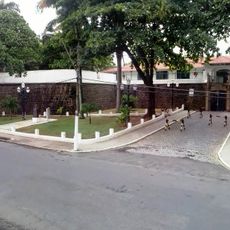
The monument stands on the Largo do Campo Grande, the top of the Outeiro Grande, beside the Teatro Castro Alves. Its Carrara marble pedestal, cast-iron railings and stairway are best examined up close on foot, and the surrounding gardens and square allow a walk around the whole ensemble. The granite bases of the eight lamp posts are the only Brazilian-made parts.
The eight cast-iron lamp posts around the pedestal were made by Giuseppe Michelucci in Pistoia, each seven metres tall with a candelabra top. Their individual bases are the only Brazilian-made parts of the monument: granite quarried in Itiúba, Bahia. The surrounding iron grille is also cast iron.
The community of curious travelers
AroundUs brings together thousands of curated places, local tips, and hidden gems, enriched daily by 92,880 contributors worldwide.