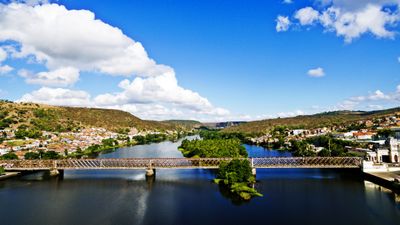
Ponte Dom Pedro II, Iron railway bridge in Cachoeira and São Félix, Brazil
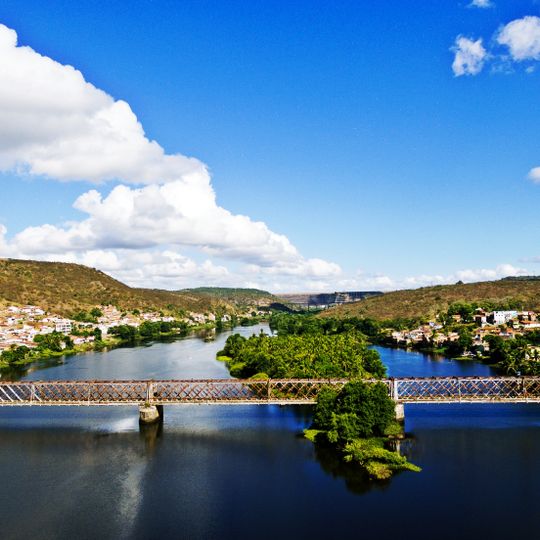
Ponte Dom Pedro II is a 365.64-metre iron and wood truss bridge over the Rio Paraguaçu, linking Cachoeira and São Félix. Its central pillar stands on a small vegetated island in the river. The bridge carries railway, vehicle and pedestrian traffic.
Construction was completed in 1885 using iron components manufactured in England and shipped to Brazil. This project became a key link in the region's railway expansion during the late 19th century.
The central pillar stands on a small river island that holds spiritual meaning in Candomblé traditions. This site weaves together the religious heritage of the region with its physical structure.
The bridge carries railway, road and foot traffic on a single deck, so pedestrians share the crossing with trains and vehicles. The central pillar stands on a small vegetated island in the Rio Paraguaçu, visible from the deck. Cross on foot with attention to rail and vehicle movement, and allow time for congestion at both ends in Cachoeira and São Félix.
The structure received official recognition as an IPAC historic heritage site, highlighting its exceptional role in Brazil's infrastructure development. This designation reflects the region's technological achievements during the 19th century.
The community of curious travelers
AroundUs brings together thousands of curated places, local tips, and hidden gems, enriched daily by 92,817 contributors worldwide.