Theatro da Paz, Opera house in Campina, Belém, Brazil.
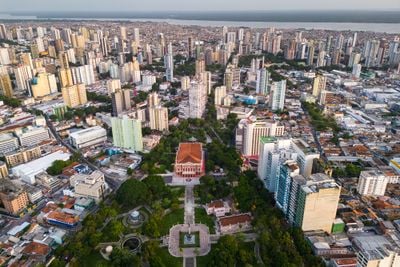
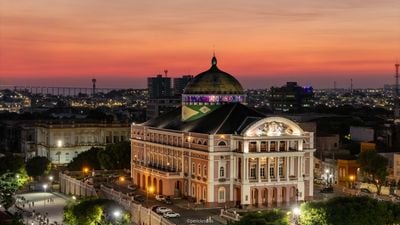
Theatro da Paz faces Praça da República with a pink and cream neoclassical facade. A dark ribbed dome with green and yellow diamond banding and a ring of windows rises above the main block, and the right section has a portico with columns and a curved pediment holding sculpted figures. The left wing sets two rows of arched windows over a ground-level arcade.
Construction of the theater started in 1869 and was completed in 1874, with the building opening to the public in 1878. This timing coincided with the economic boom from Amazon rubber trade that shaped northern Brazil's prosperity.
The name was suggested by bishop Dom Macedo Costa in 1869, alluding to the end of the Paraguayan War; it was later shortened because "Nossa Senhora" was deemed unfit for a venue hosting "worldly presentations". The theatre became the centre of Belém's Belle Époque culture polygon with Palacete Bolonha, Grande Hotel and Cine Olympia. Since the 1990s, free or low-cost opera festivals have staged works such as Il Barbiere di Siviglia and O Guarani.
Visitors can take guided tours lasting about thirty minutes to explore the building and learn about its features. The main hall accommodates between 900 and roughly 1100 people depending on the type of performance being held.
The interior contains busts carved from Carrara marble and floors made from precious wood mosaics that demonstrate fine craftsmanship. A notable mural painted by Domenico de Angelis depicts Greek deities and represents a rare artistic work found within the performance hall.
The community of curious travelers
AroundUs brings together thousands of curated places, local tips, and hidden gems, enriched daily by 92,810 contributors worldwide.