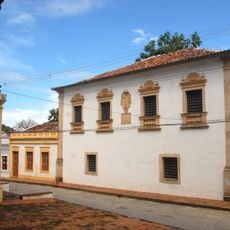
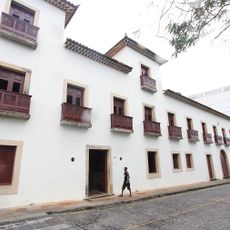
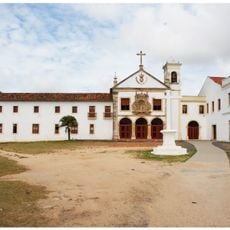
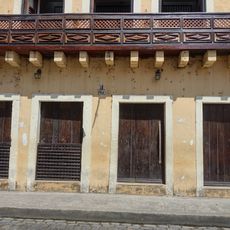
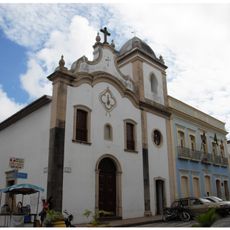
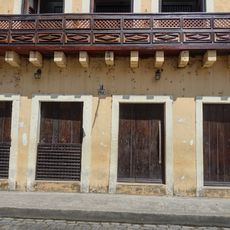
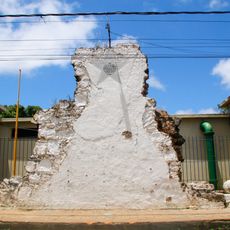
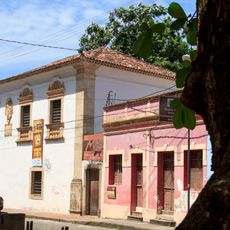
Feitorias de Igaraçu e na Ilha de Itamaracá, Colonial fortress in Igaraçu and Itamaracá Island, Brazil
The Feitorias de Igaraçu e na Ilha de Itamaracá consist of two defensive structures positioned along the Santa Cruz Channel, which connects the Atlantic Ocean to mainland Pernambuco. These buildings were built during the early colonial period to serve both as trading facilities and military defense points for the region.
Portuguese authorities established these trading posts between 1516 and 1519 under Cristóvão Jaques to protect the Brazil wood trade and defend against French invasions. These installations marked the beginning of European presence along Brazil's northeastern coast.
The name Igarassu comes from the Tupi word for a canoe, and the feitoria was a place where Portuguese traders bartered with the Indigenous peoples of the coast for pau-brasil. In 1531 the feitor Diogo Dias and five Portuguese resisted a French assault for two days alongside several dozen Indigenous allies. The French then forced the Portuguese to help build a new fort on Itamaracá, renamed île Saint Alexis.
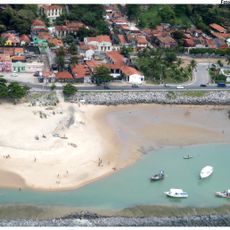
The Igarassu site lies at the mouth of the Igarassu River, on its right bank, in the Recife metropolitan area; the Itamaracá fort stood on the southern tip of the island, then called Ascensão. The original feitoria was replaced in 1531 by a French fort on Itamaracá, and Pero Lopes de Sousa rebuilt the riverside post in 1532. Approach by the river mouth and the Santa Cruz Channel.
The French ship La Pèlerine, carrying 120 men and 18 cannons, bombarded and took the Igarassu feitoria in March 1531 after a two-day resistance by feitor Diogo Dias, five Portuguese and several dozen Indigenous fighters. The Portuguese paid 400 ducados and helped build a replacement fort on Itamaracá, which Pero Lopes de Sousa destroyed in 1532 after an eighteen-day siege.
The community of curious travelers
AroundUs brings together thousands of curated places, local tips, and hidden gems, enriched daily by 93,010 contributors worldwide.