Rust en Vreugd, Urban architecture museum in Cape Town, South Africa.
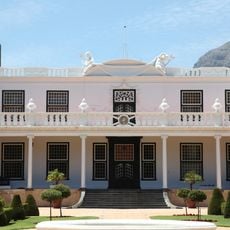
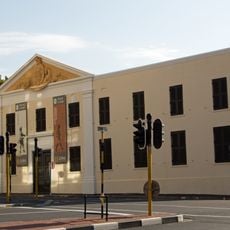
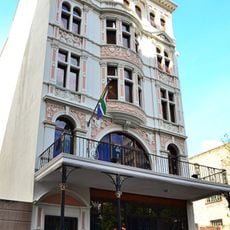
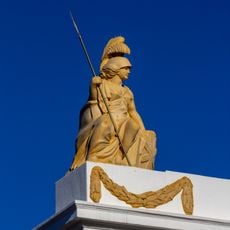
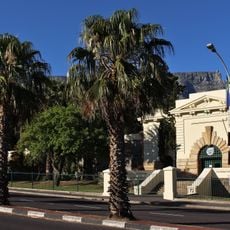
Rust en Vreugd is a two-story, flat-roofed house on Buitenkant Street, built in 1778 in the Cape Dutch style. Its facade has a porch, balcony and four Corinthian columns; Louis Thibault designed the facade, Anton Anreith carved the porch woodwork and rococo fanlight, and Hermann Schutte built the front door. Inside are two lounges, a dining room, pantry, kitchen and bedrooms around a rear courtyard, with more rooms and a balcony above. It now holds part of the William Fehr Collection of pictorial Africana.
Willem Cornelis Boers, a VOC official, had the house built in 1778 and owned it until 1782, when he was recalled to the Netherlands over corruption. Olof de Wet sold it in 1785 to the French doctor Jean Martin; from 1814 to 1826 it was the residence of Cape governor Lord Charles Somerset. The Hoppers renamed it The Grove, and from July 1885 it housed a teachers' college, a state guesthouse, a school and a nursing school.
The residence served as home to merchants and collectors whose works on display document life across different periods of South African history. Visitors today encounter artworks in the rooms showing everyday scenes, people, and moments from the past.
The museum sits on Buitenkant Street in Cape Town Central and sometimes requires advance arrangements for viewing the sensitive art collection. It is wise to check opening hours and any conditions before your visit.
The wrought-iron gates standing at the house today were bought in 1878 from a congregation in Penkridge, Staffordshire, England. The original gates, dated 1778, were sold away, so the entrance a visitor sees is a Victorian English replacement rather than the Cape original.
The community of curious travelers
AroundUs brings together thousands of curated places, local tips, and hidden gems, enriched daily by 94,546 contributors worldwide.