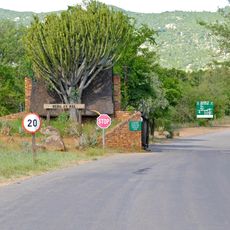
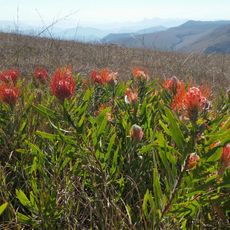
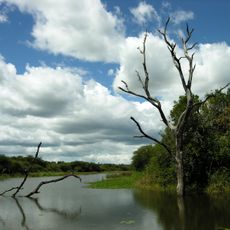
Malolotja Nature Reserve, Highland nature reserve in northwest Eswatini.
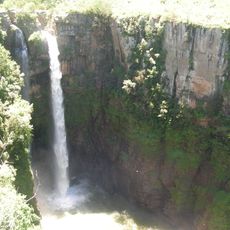
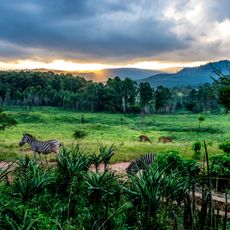
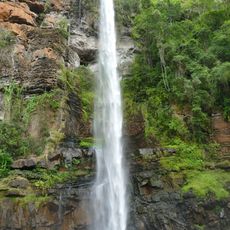
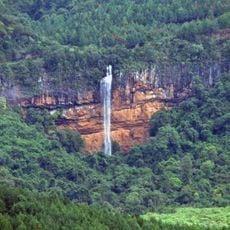
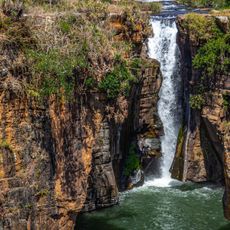
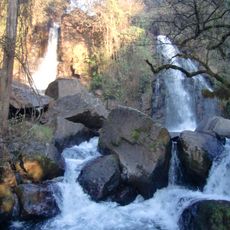
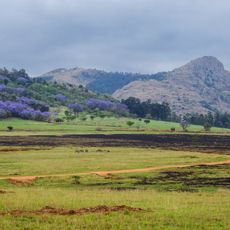
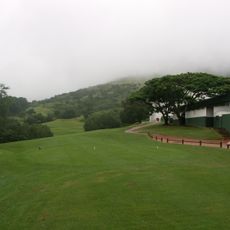
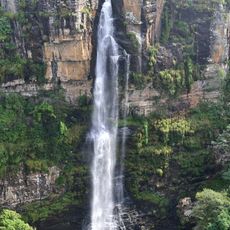
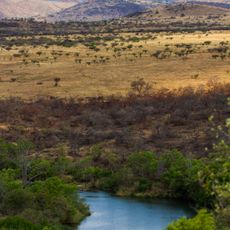
Malolotja Nature Reserve covers 18,000 hectares of mountain country on Eswatini's northwestern border with South Africa, about 30 km north of Mbabane. Its land runs from Ngwenya Mountain, the country's second highest at 1,829 m, down to the Nkomati river valley at 640 m. Malolotja Falls, over 90 m high and the tallest in the country, lies within the reserve, whose habitats range from short grassland to riverine shrub, bushveld and Afromontane forest.
The rocks in the reserve formed about 3.5 billion years ago from ocean sediments that later transformed into shale and quartzite. This ancient geological history still shapes the appearance and structure of the landscape today.
The reserve takes its name from the Malolotja River and falls within the area between Ngwenya and Bulembu mountains that the Swaziland National Trust Commission proposed to King Sobhuza II in the 1970s. Families living there were resettled on farmland beside the reserve. Visitors today see the landscape shaped by that grazing history.
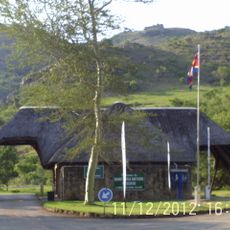
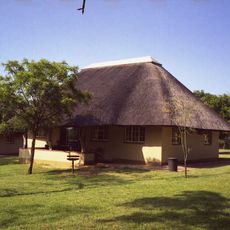
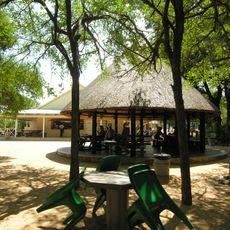
Visitors can use several accommodation options nearby, including camping sites and self-catering log cabins. Access to traditional beehive chalets at Hawane is also available, offering different experiences for guests.
The park's bedrock is among the oldest in the world: ocean-floor sediments laid down more than 3.5 billion years ago were later compressed by heat and pressure into shale and quartzite. The Ngwenya iron ore mine also lies inside the reserve, near the Hawane Dam.
The community of curious travelers
AroundUs brings together thousands of curated places, local tips, and hidden gems, enriched daily by 93,972 contributors worldwide.