Blaauboschkraal stone ruins, Provincial heritage ruins in Waterval Boven, South Africa
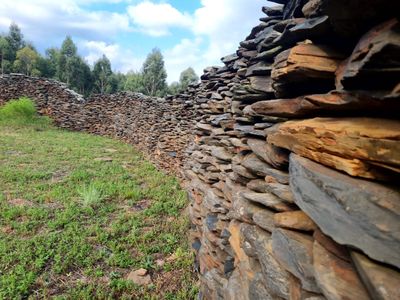
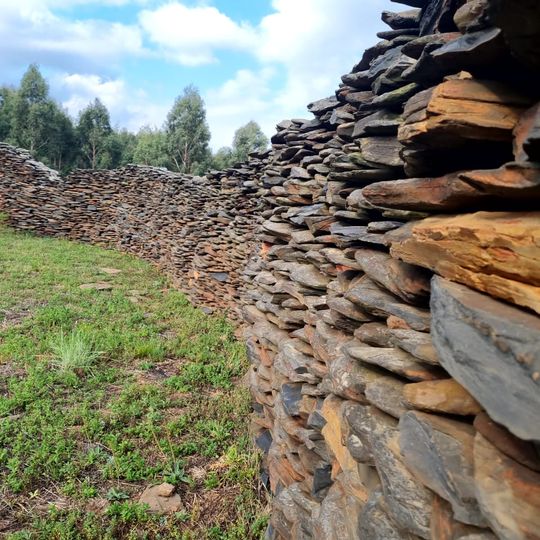
Blaauboschkraal stone ruins is an archaeological site in Waterval Boven, South Africa, spread across several slope terraces along a river valley. The site consists of circular enclosures of varying sizes, built with dry-stacked boulders and connected by narrow passages.
The Bokoni built this settlement around the early 16th century as part of a stone-walling system covering some 10,000 square kilometres of the Mpumalanga escarpment. It belongs to the third phase of Bokoni building, when settlements were hidden in steep-sided valleys as refuge from Mfecane-driven invaders. The homesteads and terraces were abandoned by the 1830s.
The walls show how the Bokoni adapted their settlements to steep slopes, stacking local stones so they would hold for centuries without mortar. Visitors can still recognize how spaces for people and animals were separated by the different diameters of the stone circles.
Anyone coming here needs sturdy shoes, as the paths cross loose stones and uneven sections between the ruins. The sun stands high at midday, so a visit in the morning or late afternoon is more comfortable and lights the stone shapes better.
The ruins lie isolated from other stone-walled settlements in the region, unlike the connected open-valley homesteads of earlier Bokoni phases. This isolation is linked to the third phase of Bokoni civilisation, when Mfecane pressure pushed settlements into hidden kloofs, and to a decentralised political system. The Blouboskraalspruit below fed a trade network reaching the Zimbabwe-Portuguese route.
The community of curious travelers
AroundUs brings together thousands of curated places, local tips, and hidden gems, enriched daily by 94,357 contributors worldwide.