Blyde River Canyon, Canyon in Mpumalanga, South Africa
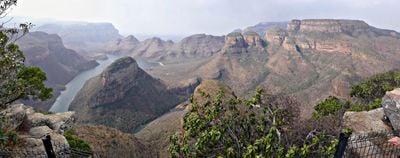
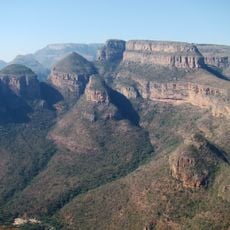
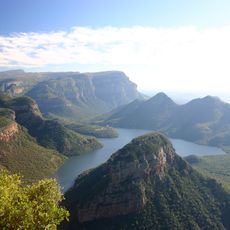
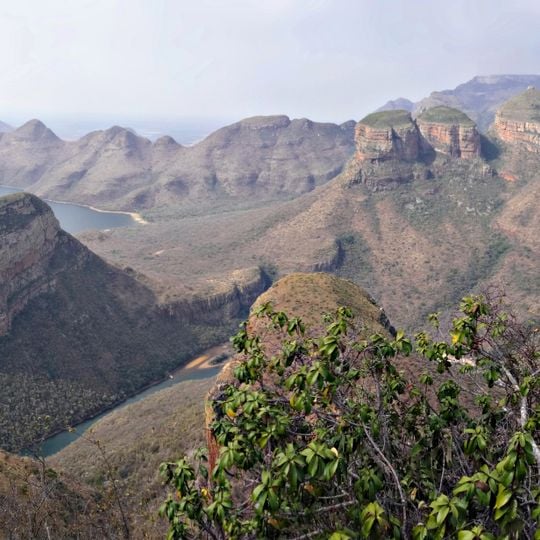
Blyde River Canyon is a 26 km canyon in Mpumalanga, cut mainly through red sandstone to a depth of up to 800 m. Its rims are flat-topped ridges with vertically scored reddish-brown, tan and grey cliffs, dropping to the winding Motlatse (Blyde) River and its pale sandbanks. A rounded, grass-covered spur rises in the foreground, and the far wall carries banded rock buttresses capped with pale stone.
The Blyde River, which gives the canyon its name, was named in 1844 during a Voortrekkers' expedition: Hendrik Potgieter's party returned safely from Delagoa Bay to companions who had presumed them dead and had named a nearby stream Treurrivier, the mourning river. Blyde means glad or happy in old Dutch. In 2005 the river was renamed the Motlatse River, and the provincial government announced the canyon would be renamed too.
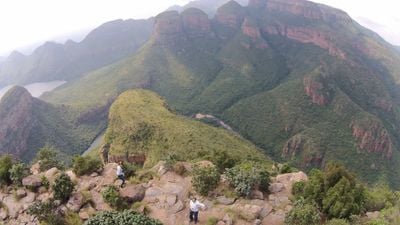
The Three Rondavels rock formations resemble the shape of traditional South African round houses with thatched roofs. Visitors often notice how the name directly connects these natural pillars to the architectural style of local heritage.
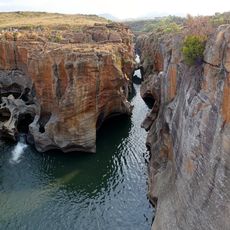
The canyon lies along the Panorama Route northeast of Johannesburg, starting at Bourke's Luck Potholes and running 26 km to the Blyde River's confluence with the Olifants River. Viewpoints such as the Three Rondavels and God's Window are reached by public road, and the surrounding Drakensberg escarpment is served by an established tourism infrastructure.
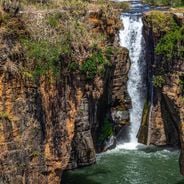
The Kadishi Tufa waterfall displays natural rock formations that resemble the features of a weeping face. This visual effect develops from mineral deposits and water patterns accumulated over a long time.
The community of curious travelers
AroundUs brings together thousands of curated places, local tips, and hidden gems, enriched daily by 93,118 contributors worldwide.