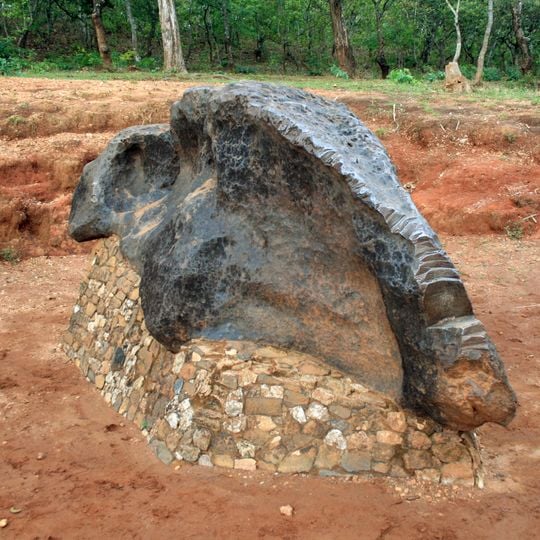
Mbosi meteorite, Protected iron meteorite in Mbozi District, Tanzania
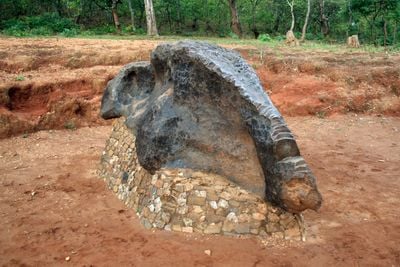
The Mbosi meteorite is a protected iron formation in Mbozi District that sits in its original location with a dark-colored surface showing weathering marks. The mass consists mainly of iron and nickel, which gives it the characteristic composition of this cosmic rock.
Scientists documented this formation for the first time in 1930, though it had long been known to local communities in the region. Tanzania's antiquities authorities later recognized its importance and secured it through protective measures.
Locals call the meteorite kimondo, the Swahili word for a falling star, and have known it for generations. It takes its name from Mbozi District in the Songwe Region. The site is a protected national monument, and visitors can see the dark iron mass resting on a low stone wall.
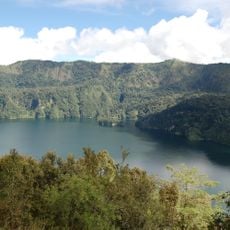
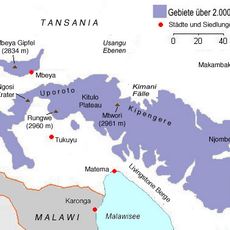
The site lies west of Mbeya and can be reached by road heading toward Tunduma, though a considerable journey is needed. It is wise to check local conditions beforehand and consider hiring a local guide for better understanding of the place.
Locals knew the mass as kimondo long before scientists reached it in 1930, and no impact crater was found at the site. Its iron is about 90% of the mass, with 8% nickel, and the metal shows a Widmanstätten pattern. The silicate inclusions inside have a quartz core wrapped in glass that has partly turned to pyroxene and plagioclase.
The community of curious travelers
AroundUs brings together thousands of curated places, local tips, and hidden gems, enriched daily by 93,074 contributors worldwide.