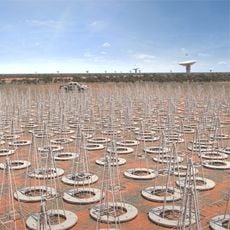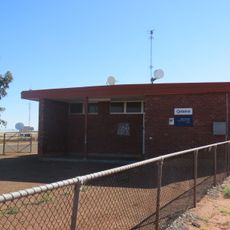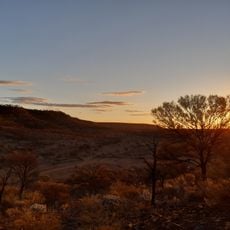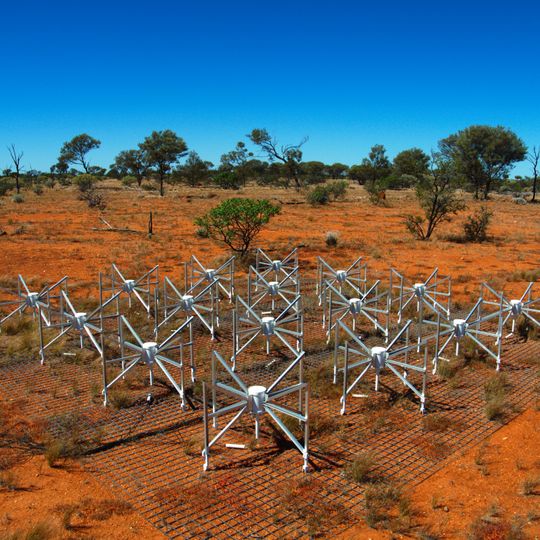
Murchison Widefield Array, Radio interferometer at Murchison Radio-astronomy Observatory, Western Australia
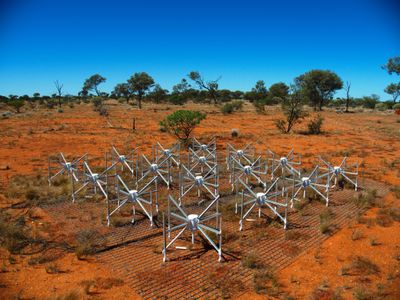
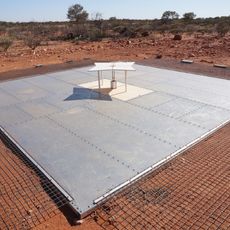
The Murchison Widefield Array is a radio telescope with 128 antenna tiles at the Murchison Radio-astronomy Observatory in Western Australia. The facility receives radio waves between 80 and 300 megahertz and helps detect some of the universe's earliest light.
The project started in 2009 as a partnership between research groups from Australia, the United States, Canada, and Europe. First observations began in 2013 and opened a new chapter in radio astronomy research.
The site draws researchers from around the world who collaborate on understanding the universe's beginnings through radio signals. This international teamwork has shaped how modern radio astronomy is conducted.
The site sits in a protected zone with minimal electromagnetic interference, which means special permission is required to visit. It is best to contact the observatory in advance to arrange access and learn about visiting conditions.
A remarkable finding emerged when a student researcher analyzed the data and discovered plasma tubes in the ionosphere that had gone unnoticed before. This unexpected result showed that the instrument could reveal new things about Earth's atmosphere, not just distant galaxies.
The community of curious travelers
AroundUs brings together thousands of curated places, local tips, and hidden gems, enriched daily by 91,688 contributors worldwide.