Kati Thanda–Lake Eyre, Salt lake in Far North, Australia
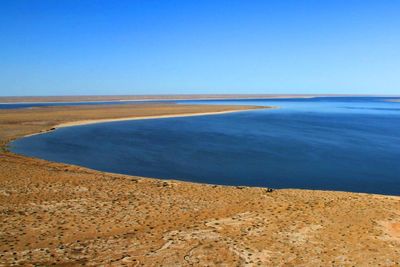
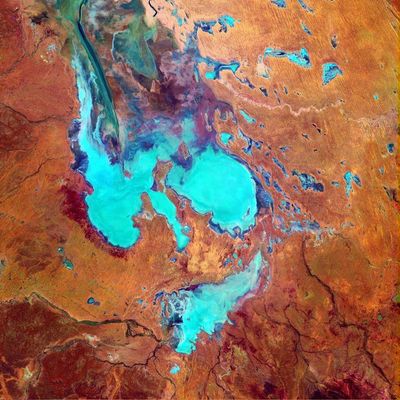
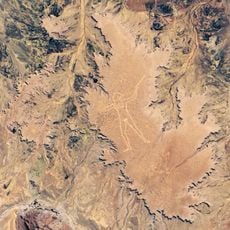
Kati Thanda is an endorheic salt lake in South Australia that stretches 144 kilometers long and 77 kilometers wide, forming the largest salt lake surface in the country. The lakebed sits roughly 15 meters (49 feet) below sea level and divides into two main basins separated by a narrow land bridge.
Edward John Eyre reached the lake in 1840 as the first European explorer and gave it his name at the time. The government officially added the original Arabana name Kati Thanda in 2012 to recognize the region's thousands of years of connection with its first inhabitants.
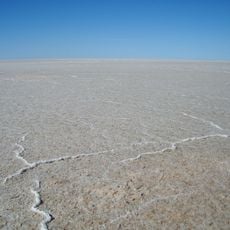
The Arabana name Kati Thanda means great salt and describes exactly the white lakebed that looks like a frozen plain during dry times. Visitors sometimes see small groups of pelicans or other waterbirds that arrive after rare rains and rest briefly along the shore.
Access to the lake requires a Desert Parks Pass and a four-wheel drive vehicle with enough fuel, water, and food for several days. The best time to visit is after heavy rains when the lakebed fills with water, but tracks can become impassable when wet.
When the lake fills, the water surface mirrors the sky so perfectly that horizon and water become impossible to tell apart. This optical effect happens because of the absolute flatness of the lakebed and the shallow water depth during rare floods.
The community of curious travelers
AroundUs brings together thousands of curated places, local tips, and hidden gems, enriched daily by 90,902 contributors worldwide.