Kaibon Palace, Royal palace ruins in Serang City, Indonesia.
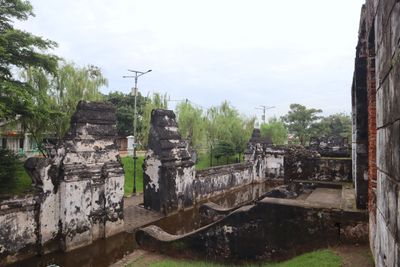
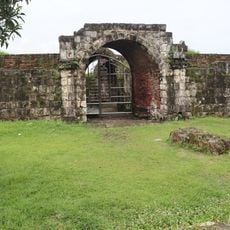
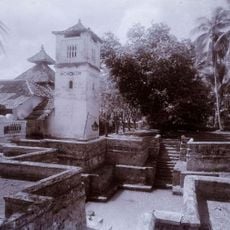
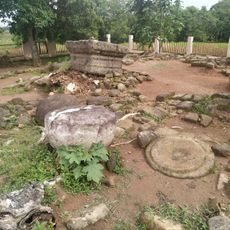
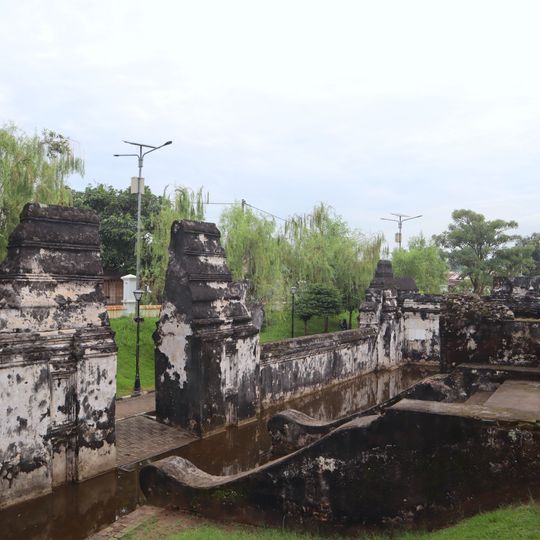
Kaibon Palace is a ruined brick-and-limestone kraton in Kasunyatan, Serang, built around 1815 and destroyed by the Dutch in 1832. Four main gates remain: a winged candi bentar and a paduraksa whose upper section is still joined, plus the large Pintu Dalem. Two stepped, weathered pillars and a low wall survive in the foreground, and a sunken square room with beam sockets in its walls is thought to have been Ratu Aisyah's chamber.
Built around 1815 during the reign of Sultan Syafiuddin (1809–1815), the palace became the residence of his mother, Ratu Aisyah, who governed temporarily after his death because his heir was only five years old. In 1832 the Dutch destroyed it together with Keraton Surosowan, after Syafiuddin refused Daendels' envoy Du Puy and had him beheaded. It was designated a cultural heritage site in 1998.
The name Kaibon means "keibuan" (motherhood), as the palace was the residence of the sultan's mother, Ratu Aisyah, who governed while her five-year-old son held the throne. Today the site serves as educational tourism for the Banten Lama area, and the sunken square room is thought to have been her chamber, cooled by water channeled beneath a wooden floor.
The ruins lie in Kasunyatan, Kasemen, in Serang, within the Banten Lama area. The complex covers 2 hectares and was originally ringed by water channels, so every entrance, front or back, was reached by water. Visitors walk among standing gates, walls and a sunken room, so wear sturdy shoes for uneven brick and stone ground.
The name comes from the Indonesian word 'keibuan,' meaning motherly love, reflecting the palace's role as a queen mother's residence. This choice reveals how deeply the ruler's personal role shaped the identity of the place.
The community of curious travelers
AroundUs brings together thousands of curated places, local tips, and hidden gems, enriched daily by 93,349 contributors worldwide.