Great Mosque of Banten, 16th-century mosque in Serang City, Indonesia
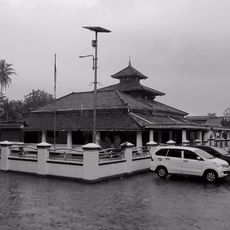
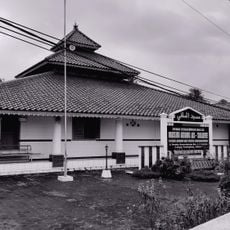
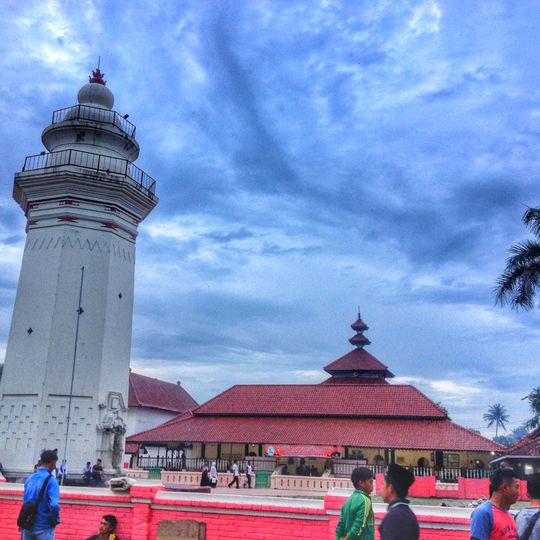
The Great Mosque of Banten is a single-storey mosque in Old Banten, Serang, with a long, low hipped roof of red tiles and a small tiered cupola with a dark finial at its centre. The facade is open, supported by slender white columns above a low white wall with a pinkish-red base. A tall white minaret with a square shaft, a railed balcony and a red-capped domed top stands to the left.
The site was founded in 1552 when ruler Hasanuddin ordered construction to strengthen Islam in the region. Later additions followed under his successor, who expanded the present structures and turned the compound into a major pilgrimage destination.
The name honors Maulana Hasanuddin, one of the region's earliest Muslim preachers whose teachings still shape how religious spaces are organized in the area. Visitors often notice the combination of open courtyards and covered prayer halls, designed to adapt to tropical conditions while allowing plenty of air circulation.
The main hall is open daily for worshippers, and visitors should remove shoes before entering prayer areas and wear modest clothing. Non-Muslims may explore the outer areas but should be especially respectful during prayer times and avoid entering the inner sections.
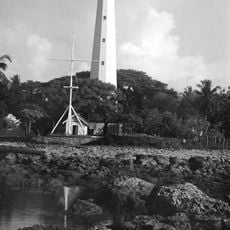
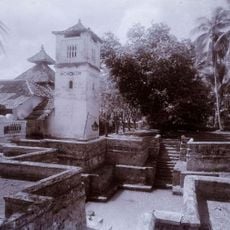
The 24-metre minaret added in 1632 was designed by a Chinese builder named Cek-ban-cut, and its shape recalls a lighthouse, fitting a port town. Its octagonal brick base measures about 10 metres across, and the tower mixes Indian Mughal motifs with old candi ornament.
The community of curious travelers
AroundUs brings together thousands of curated places, local tips, and hidden gems, enriched daily by 93,196 contributors worldwide.