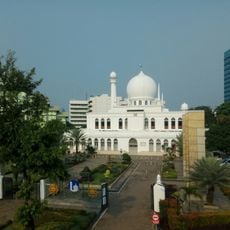
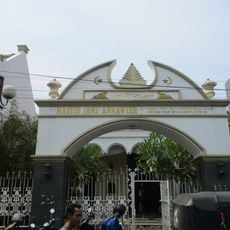
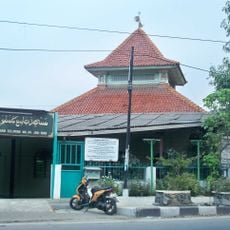
Kali Pasir Mosque, Islamic prayer house in Tangerang, Indonesia.
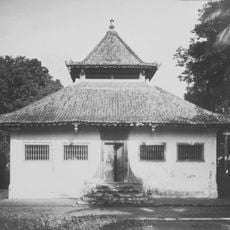
Kali Pasir Mosque stands on the east bank of the Cisadane River in Sukasari, Tangerang, covering about 288 square metres. Its menara resembles a Chinese pagoda, and the prayer rows (saf) are set at a slant to the building because a qibla-aligned structure would have required demolishing neighbouring houses. Four wooden pillars inside and a small dome with Chinese motifs are the original features still kept.
Tumenggung Pamit Wijaya of Kahuripan, Bogor, founded the mosque in 1700 while travelling from the Cirebon Sultanate to Banten; he stopped in Tangerang and built it with local Muslims and Chinese residents. In 1712 management passed to his son, Raden Bagus Uning Wiradilaga. Repeated renovations left Arab, Chinese and European elements, with only the four wooden interior pillars and the small Chinese-patterned dome kept intact.
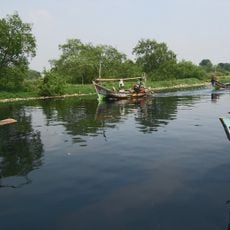
Each year the mosque holds a procession of miniature boats for Mawlid, a tradition begun in 1926, filling the boats with fruit as a symbol of the arrival of Islamic elders on the Cisadane. The prayer rows inside run at an angle to the building because a qibla-aligned structure would have required demolishing neighbouring houses.
The mosque no longer holds Friday prayers, so visits are best timed outside the five daily prayer sessions. It stands on the east bank of the Cisadane in Sukasari, beside Boen Tek Bio Temple. The prayer hall covers about 288 square metres; the slanted rows of the saf are visible inside. The grave of regent Raden H Ahmad Penna lies behind the building.
The building stands immediately next to Boen Tek Bio Temple in a predominantly Chinese neighborhood. This proximity demonstrates a rare historical example of religious communities sharing the same space with mutual respect.
The community of curious travelers
AroundUs brings together thousands of curated places, local tips, and hidden gems, enriched daily by 93,180 contributors worldwide.