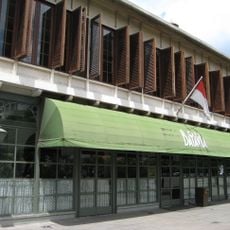
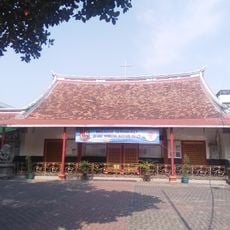
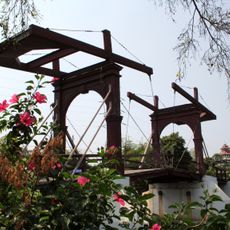
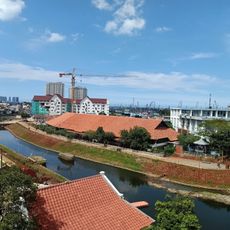
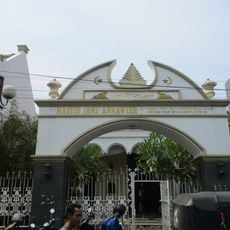
Jami Kampung Baru Inpak Mosque, 1743 mosque in Pekojan, Jakarta, Indonesia.
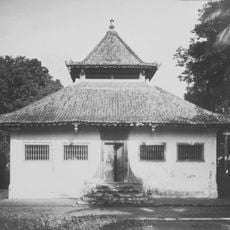
Jami Kampung Baru Inpak Mosque occupies a 1,050-square-metre plot on Jalan Bandengan Selatan. Its square plan carries a tiered roof whose upper level is pyramidal, echoing Javanese houses with four central soko guru posts. The floor is white with green and red mats, and an antique lamp hangs inside. Carved grape clusters and window pillars survive from the original building.
An Indian merchant called Syeikh Abubakar built this structure between 1743 and 1748 to serve the needs of traders in colonial Batavia. Dutch colonial authorities later referred to it as Moorsche Tempel in 1829, reflecting its importance to the Indian Muslim merchant community.
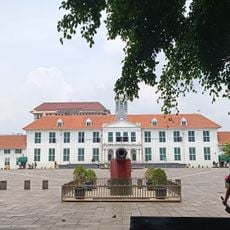
The mosque's name, Kampung Baru ("new village"), recalls the settlement that grew around it, while a Dutch article of 1829 called it Moorsche Tempel, or "Temple of the Moors", a term then applied to Indian Muslims. The original carved wooden pulpit, described as the most beautiful, has been replaced; the original is kept at the Jakarta History Museum.
This structure is located on Jalan Bandengan Selatan near Masjid Al-Anshor and is easily accessible on foot when exploring this neighborhood. Visitors should be aware that it is actively used during prayer times and modest dress is expected.
This structure retains features from the era of Indian merchants who arrived here in the 1700s and established themselves in this neighborhood. This connection to the Indian trading community continues to shape how the place looks and is remembered today.
The community of curious travelers
AroundUs brings together thousands of curated places, local tips, and hidden gems, enriched daily by 93,204 contributors worldwide.