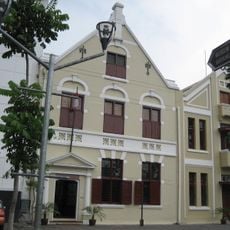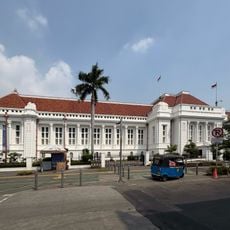
Jakarta History Museum, History museum in West Jakarta City, Indonesia
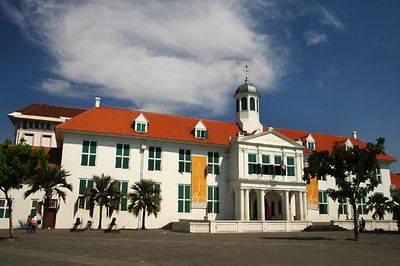
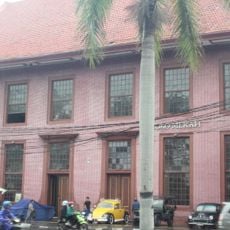
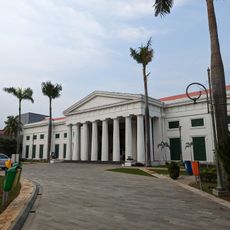
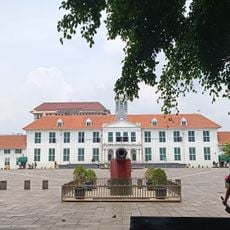
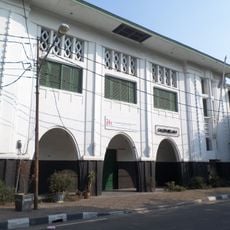
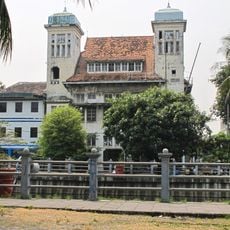
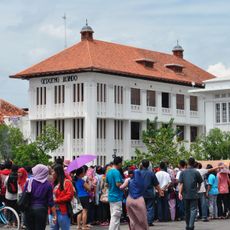
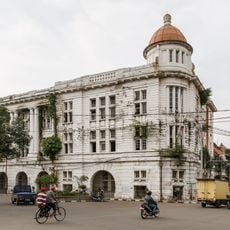
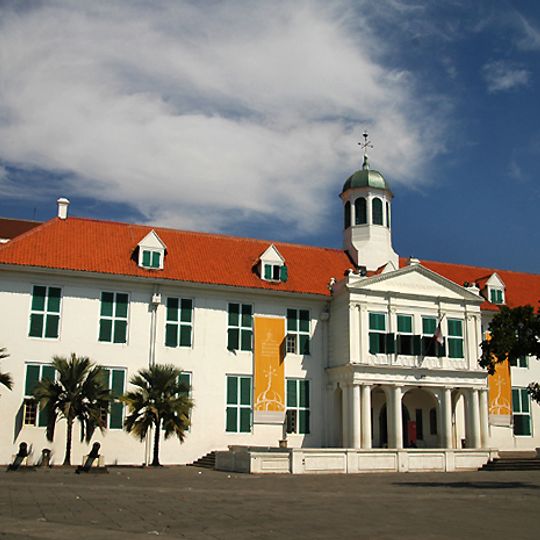
The Jakarta History Museum occupies the former Stadhuis of Batavia, a long two-storey white building with a red tiled roof, green-shuttered dormer windows and a central cupola topped by a weathervane. Four columns support a pediment and balcony, and the facade carries the inscription "GOUVERNEURSKANTOOR". Inside are 37 rooms and cells beneath the front portico.
The first city hall on this site was completed in 1627 under Governor-General Jan Pieterszoon Coen. The unstable ground caused it to sink, so in 1707 Governor-General Joan van Hoorn ordered it rebuilt on the same foundations; the new building was inaugurated on 10 July 1710 by Abraham van Riebeeck. It served as Batavia's administrative seat until 1913, then housed the West Java governor's office and, from 1974, the Jakarta History Museum.
The building preserves handcrafted furniture from the Betawi region, blending Chinese carvings with Indian inlay and Dutch silhouettes. These craft techniques show how artisans from different communities worked together on chests, cabinets, and seating for wealthy households.
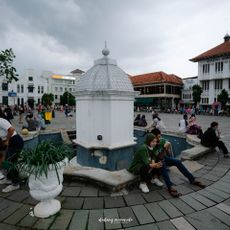
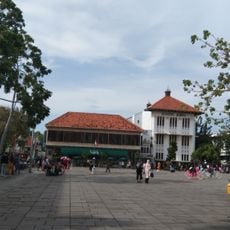
The museum faces Fatahillah Square, with the entrance through the portico under the "GOUVERNEURSKANTOOR" inscription; the Si Jagur cannon and the reconstructed fountain stand on the square outside. The 37 rooms are reached by stairs, and the former prison cells lie beneath the front portico. The building was closed for conservation from July 2011 and reopened in February 2015.
The basement held prison cells where Prince Diponegoro was detained during his captivity before being exiled to Sulawesi. These rooms remain open to visitors today, showing the harsh conditions of detention in the 19th century.
The community of curious travelers
AroundUs brings together thousands of curated places, local tips, and hidden gems, enriched daily by 92,703 contributors worldwide.