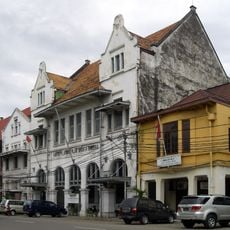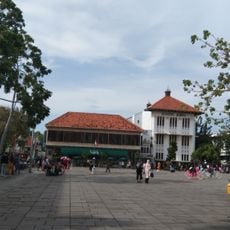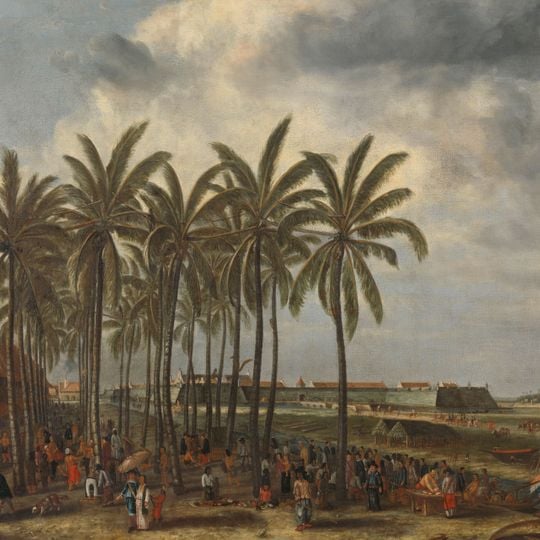
Batavia Castle, Dutch East India Company fort in Jakarta, Indonesia
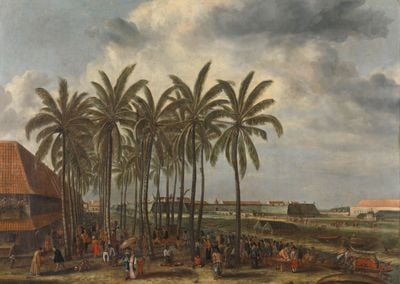
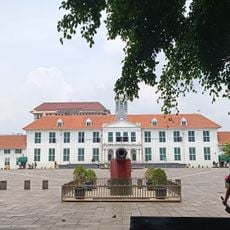
Batavia Castle was a Dutch East India Company fort at the mouth of the Ciliwung River in Jakarta. Its four bastions were named Diamant and Robijn in the south and Parel and Saphier in the north; the sea-side Waterpoort and the land-side Landpoort served as gates. A moat encircled the whole complex, and inside stood the two-storey residence of the governor-general, a chapel, quarters for senior merchants and a printing house.
The fort was built in 1620 after the Dutch East India Company took control of Jayakarta and established its regional base here. It was expanded significantly in 1629 to strengthen defenses against threats from the surrounding sultanate.
The castle housed a chapel, a book printing press, and quarters for senior merchants, and slaves were kept within its walls. Former governor-general Adriaan Valckenier spent about ten years imprisoned in the dungeon of the Robijn bastion until his death. The site is still remembered locally as Kota Inten, meaning Diamond Fortress.
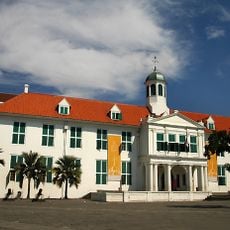
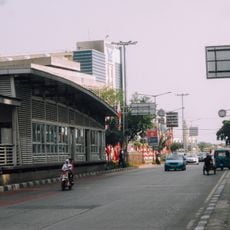
The site sits vacant today under Jakarta's provincial government care, with ongoing archaeological work uncovering brick foundations buried about two meters below ground level. Visitors can explore the original layout through these exposed foundations, which reveal how the fort was arranged and structured.
Before 1874 all four bastions of Batavia Castle were still intact; they disappeared completely from 1874 onward. The bastions were named Diamant and Robijn in the south and Parel and Saphier in the north. In the 1980s part of the site was still called Kota Inten, meaning Diamond Fortress.
The community of curious travelers
AroundUs brings together thousands of curated places, local tips, and hidden gems, enriched daily by 94,123 contributors worldwide.