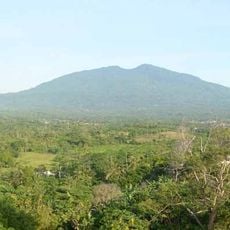
Pulosari, Stratovolcano in Pandeglang Regency, Banten, Indonesia.
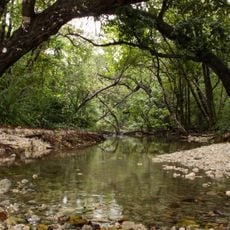
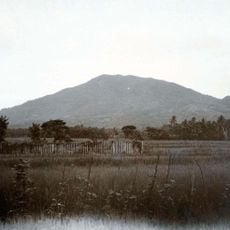
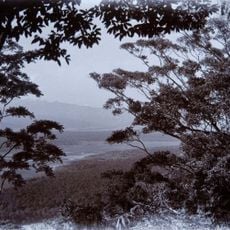
Pulosari is a stratovolcano in Pandeglang Regency, Banten, West Java. Its 300-metre-deep caldera wall holds active solfataras, and basalt, andesite and pyroxene have been identified in its rocks. At its base, Sukasari Village has nine purification pools, the largest being Citaman, which covers 941.58 square metres and is divided by gender.
Pulosari has no known eruptions; an 1875 account describes only the crater, about 800 steps across, holding boiling mud and sulfurous gas. In the 10th century a Hindu temple stood on the highland under the Sunda Kingdom, and five Caringin statues from it are now in Jakarta's National Museum. In the 16th century Hasanuddin of Banten lived on the mountain for nearly a decade, and 800 priests under Prabu Pucuk Umun converted to Islam.
Local tradition holds that 800 priests lived on the mountain under Prabu Pucuk Umun in the 16th century. Hasanuddin of Banten stayed there for nearly a decade, and converts were required to remain as guardians; those who refused left for the southern mountains. The Caringin statues, now in Jakarta's National Museum, were found near the crater.
The area is best explored on foot, with the thermal pools at the mountain's base accessible year-round. Bring sturdy shoes and water, as trails can be steep and rocky in places.
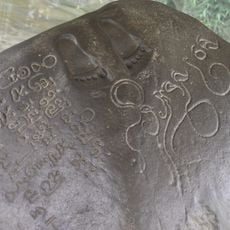
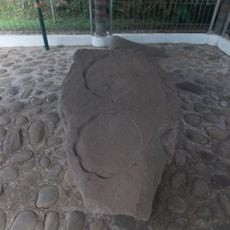
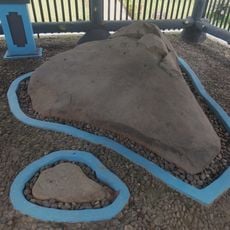
Scattered across the slopes and nearby rice fields are prehistoric megalithic structures, including the Cidaresi Bergores stone carved with mysterious triangular patterns. These ancient artifacts suggest the mountain was inhabited long before written records.
The community of curious travelers
AroundUs brings together thousands of curated places, local tips, and hidden gems, enriched daily by 93,159 contributors worldwide.