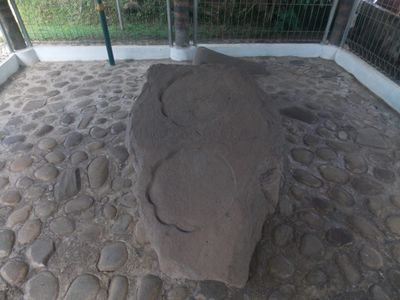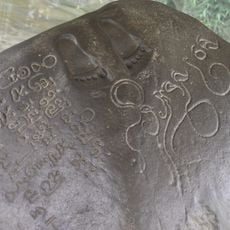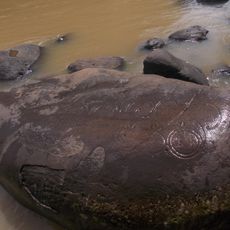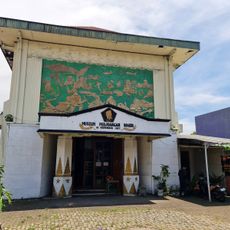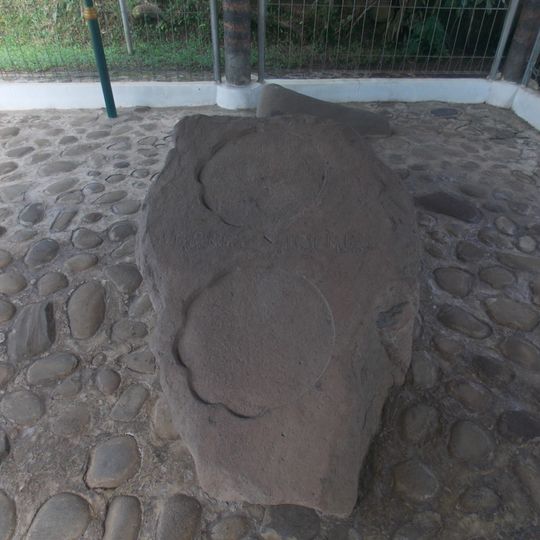
Kebon Kopi I inscription, Ancient stone inscription in Bogor, Indonesia.
The Kebon Kopi I inscription is a stone monument from the Tarumanagara Kingdom in Bogor showing two elephant footprints alongside Sanskrit text. The object is made of andesite and stands 69 centimeters tall, with symbols carved deep into its flat surface.
The inscription belongs to the Tarumanagara Kingdom, dated to the 5th to 7th centuries AD. In 1863 Jonathan Rigg, a coffee plantation owner near Buitenzorg (now Bogor), reported its discovery on his land to the Bataviaasch Genootschap van Kunsten en Wetenschappen, now the National Museum of Indonesia. It is one of three inscriptions of the Ciaruteun area, with the Ciaruteun and Muara Cianten inscriptions.
The Sanskrit text and elephant footprint carvings demonstrate the connection between King Purnawarman and the Hindu deity Indra through the symbolism of Airavata elephant.
The stone sits around 19 kilometers northwest from central Bogor toward Ciampea where three rivers meet. Visitors reach the spot through local roads that pass through rural areas.
The stone still stands where it was found, but the site lies where three rivers meet: the Ciaruteun to the south, the Cisadane to the east and the Cianten to the west, with the Cianten's mouth joining the Cisadane to the north. A second inscription, Kebon Kopi II, was found about a kilometre away and is now lost.
The community of curious travelers
AroundUs brings together thousands of curated places, local tips, and hidden gems, enriched daily by 93,162 contributors worldwide.