Kasunyatan Mosque, Islamic prayer site in Kasunyatan Village, Indonesia
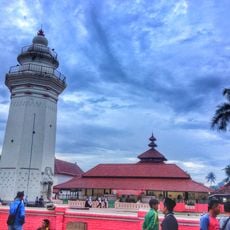
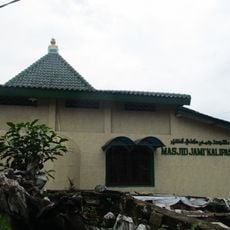
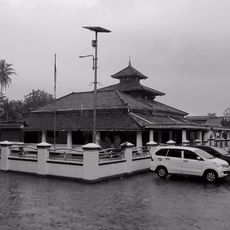
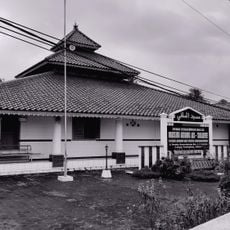
Kasunyatan Mosque stands at the centre of a walled complex in Kasunyatan village, 500 metres south of Kraton Kaibon. Its square main prayer hall, 11.3 by 11.5 metres, is built of white-washed brick and enclosed by walled serambi porches on the north, east and south, a layout unusual for Javanese mosques. The three-tiered roof rests on four main posts and carries a terracotta mustaka; an 11-metre white-brick minaret with three floors rises at the southwest corner.
Kyai Dukuh, titled Pangeran Kasunyatan, founded the mosque for the community of Islamic scholars in Kasunyatan village; he was the teacher of Sultan Maulana Muhammad. The founding date is debated but falls within the reign of Maulana Yusuf, between 1570 and 1596. In 1932, during Dutch colonial rule, Suria Nata Atmadja granted it heritage status, recorded in an inscription on the bedug in the northern serambi.
The name Kasunyatan comes from the title Pangeran Kasunyatan, held by the founder Kyai Dukuh, who gave it to both the village and the mosque. The eastern serambi holds 18 tombs, among them those of Ratu Asiyah and Syekh Abdul Syukur Putra, while the southern serambi holds 5.
The site is accessible to visitors, but dress respectfully when approaching the prayer area and be mindful of prayer times in the daily schedule. It is best to explore during non-prayer hours when the space is quieter and more conducive to looking around.
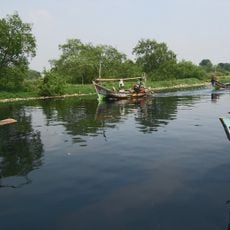
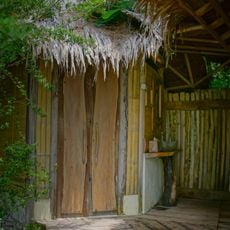
The ablution well sits at the rear of the mosque rather than the front, which is unusual compared to typical mosque layouts. This distinctive placement connects directly to a nearby river, making water access part of the site's original design rather than an added feature.
The community of curious travelers
AroundUs brings together thousands of curated places, local tips, and hidden gems, enriched daily by 93,296 contributors worldwide.