Keraton Surosowan, Royal palace complex in Serang City, Indonesia.
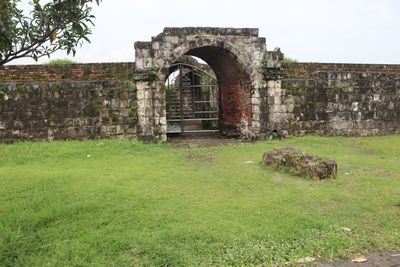
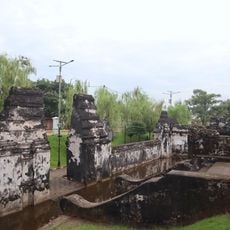
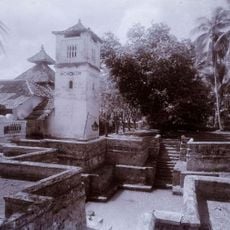
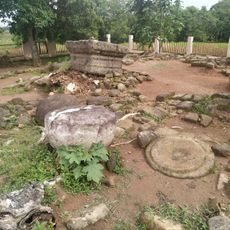
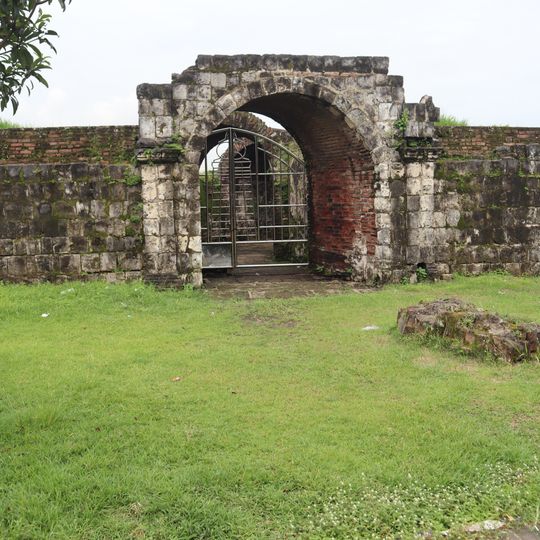
Keraton Surosowan is a ruined palace complex in Serang enclosed by a 2-metre stone wall with diamond-shaped bastions at its four corners. Three arched gateways stand on the north, east and south sides, though the south gate is walled shut. Inside, only the foundations of dozens of rectangular rooms remain, along with a green, algae-filled pool at the centre.
Built between 1526 and 1570 under Sultan Maulana Hasanuddin, founder of the Banten Sultanate, on land granted by his father Sunan Gunung Djati. Sultan Haji had it repaired between 1672 and 1687 with the help of the Dutch convert Hendrik Lucasz Cardeel, titled Pangeran Wiraguna, who added a 2-metre-high, 5-metre-thick wall. It was destroyed again in 1808 under Daendels, with damage continuing until 1832.
The name Surosowan comes from Javanese suro and sowan, meaning to pay homage. The Rara Denok pool, 30 metres long, 13 metres wide and 4.5 metres deep, was fed by an aqueduct from Tasikardi Lake about two kilometres away. Nearby stands the pancuran mas, a bathing fountain used by the court.
The site is open to visitors from early morning through the afternoon, with basic paths for exploring the ruins. It is helpful to wear comfortable shoes and bring water, as the grounds offer limited shade.
The palace was supplied by a sophisticated water system that carried water from Tasikardi Lake, located two kilometers away, to feed the royal baths. This engineering achievement reveals the sophistication of the era's construction and technical skills.
The community of curious travelers
AroundUs brings together thousands of curated places, local tips, and hidden gems, enriched daily by 93,885 contributors worldwide.