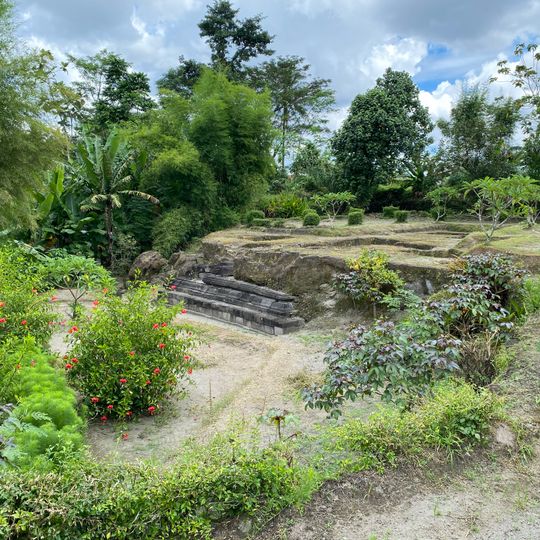
Kadisoka Temple, Hindu temple in Sleman, Indonesia
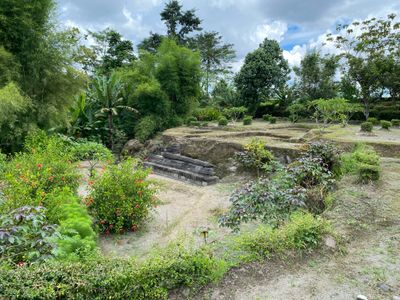
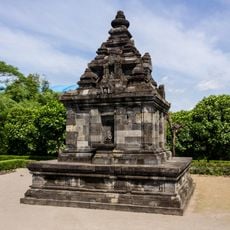
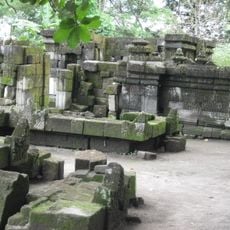
Kadisoka is a partly excavated Hindu temple of andesite blocks measuring 6.49 by 6.9 metres, set in a shallow trench on a 200-square-metre plot in Kalasan, Sleman. Its stepped base of five completed courses rises to a narrower platform, with no carving or inscription visible. The structure faces west, off by about 10 degrees.
Kadisoka was probably built in the 8th century but never finished; only about five layers of its base were completed, according to Véronique Degroot. Lahar flows from the Kuning River buried it twice, at least a century apart, leaving it under 3 metres of earth. A sand miner rediscovered it on 7 December 2000, and excavation began in February 2001.
The temple's name comes from Kadisoka hamlet, where a sand miner found the buried stones on 7 December 2000. Two caretakers clean the site, report damage and receive visitors, whether tourists or pilgrims. The gold plaque engraved with a lotus flower, found in the central pit, points to Hindu ritual use.
The site is reached by a dirt path that turns muddy in the rainy season, so sturdy footwear helps. Two caretakers clean the grounds, report damage and receive visitors, whether tourists or pilgrims. The temple lies in Kadisoka hamlet, about 100 metres west of the Kuning River and 8 kilometres north of Sambisari.
The gold plaque found in the temple pit is engraved with a lotus flower. The pit itself, a feature found only in Hindu temples, led archaeologists to identify Kadisoka as Hindu. The site was rediscovered by a sand miner on 7 December 2000.
The community of curious travelers
AroundUs brings together thousands of curated places, local tips, and hidden gems, enriched daily by 93,180 contributors worldwide.