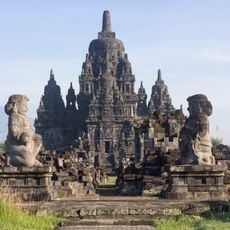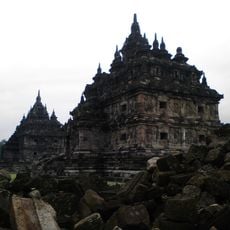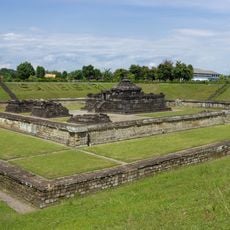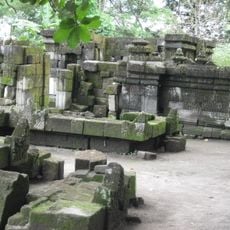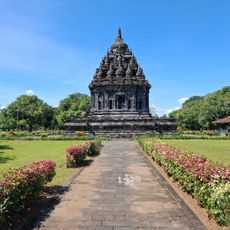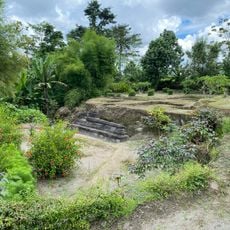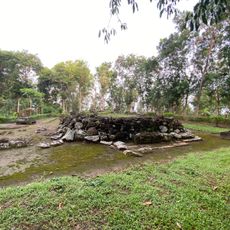
Sari Temple, Buddhist temple in Sleman, Indonesia
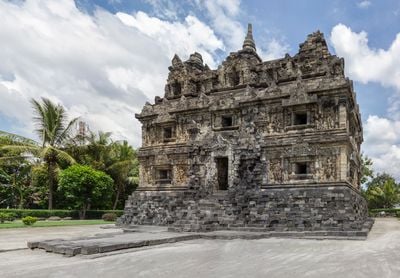
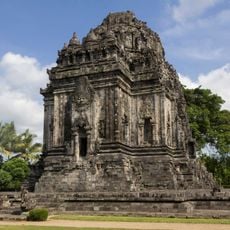
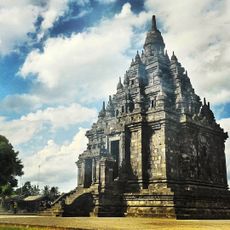
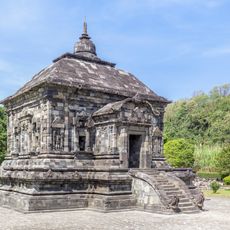
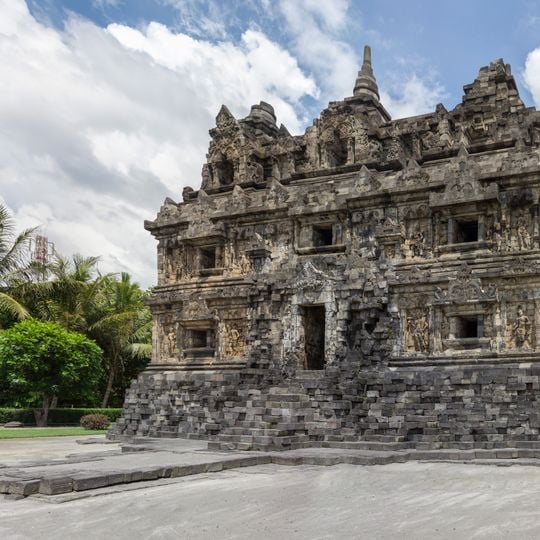
Sari Temple is a rectangular Buddhist temple of dark grey andesite blocks, measuring 17.3 by 10 metres and rising 17 metres. A central staircase leads up the rough lower base to a body divided by a projecting horizontal belt into two levels. The upper walls carry tiered cornices, carved niches and a tapering roof element topped by stupas. Inside are three chambers, each 3 by 5.8 metres, linked by doorways along a north-south axis.
This sanctuary was built in 778 CE during the reign of Maharaja Tejapurnapana Panangkaran, as recorded in the Kalasan inscription. The construction reflects a period when Buddhist temples were actively established across the region.
The name Sari, or Saré, means "to sleep" in Javanese, pointing to the building's role as a dwelling for monks. Its three chambers were linked by doors and windows, and wall niches probably held oil lamps for lighting.
The sanctuary features multiple window openings arranged in two horizontal rows, offering views into the interior layout. Visitors can best examine the architectural details and chamber structure in good daylight conditions.
The outer walls display 36 intricately carved Buddhist deity figures arranged in four distinct rows. Traces of protective plaster coating remain visible on sections of the structure today.
The community of curious travelers
AroundUs brings together thousands of curated places, local tips, and hidden gems, enriched daily by 93,242 contributors worldwide.