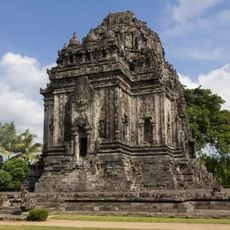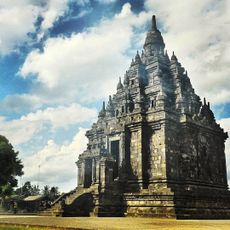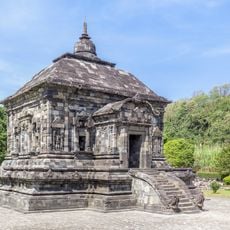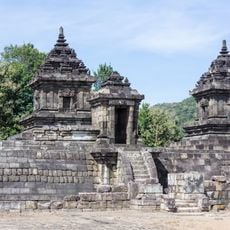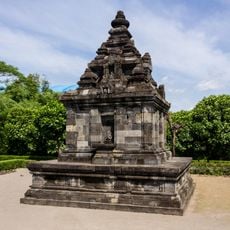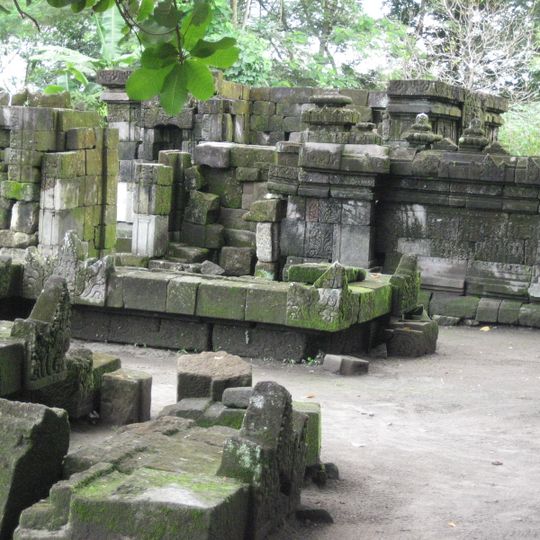
Kedulan Temple, Hindu temple in Sleman, Indonesia.
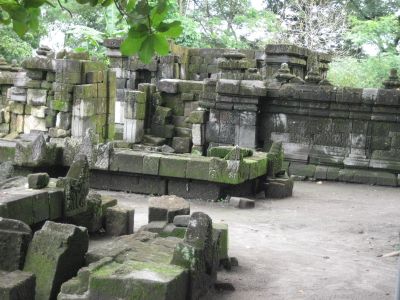
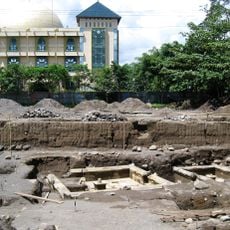
Kedulan Temple is an underground shrine complex in Sleman with a central sanctuary and three smaller buildings arranged in a square pattern beneath ground level. The site sits approximately 6 meters (20 feet) below the surface and features stone chambers containing religious statuary.
This 9th-century structure lay buried beneath volcanic ash from Mount Merapi for over a thousand years before construction workers unearthed it in 2009 at Universitas Islam Indonesia. The unexpected discovery allowed archaeologists to examine a rare example of a well-preserved medieval shrine.
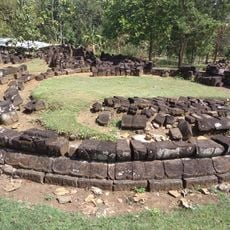
The temple displays Hindu devotional elements through its stone deity statues and architectural details that reflect the spiritual beliefs of those who built it. Visitors can see how these carvings reveal the religious practices that shaped this place centuries ago.
Access to the site is restricted with protective barriers, so visitors must register at the north entrance security checkpoint before entering. Plan to move slowly through the underground layout to properly observe the stone chambers and their contents.
The site received its Sanskrit name Pustakasala, meaning library, because it was discovered during construction of a university library building. This chance discovery linked ancient religious history with modern academic progress in an unexpected way.
Location: Sleman
GPS coordinates: -7.74277,110.46977
Latest update: December 6, 2025 17:43
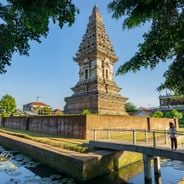
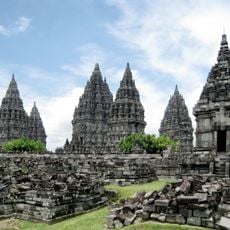
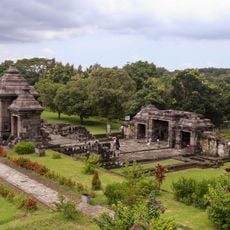
The Indonesian temples from the 8th to 14th centuries display Buddhist and Hindu architecture of the Mataram and Singhasari kingdoms. The stone structures carry reliefs, sculptures, and religious symbols depicting deities such as Shiva, Buddha, and Vishnu. The complexes are located mainly on Java and Bali, where rice fields and volcanoes shape the landscape. Borobudur near Magelang forms the largest Buddhist temple in the region with nine levels and 2,672 relief panels. Prambanan in Klaten rises with 157-foot (47-meter) towers as Java's most important Hindu sanctuary. The Gedong Songo temples near Semarang stand at 3,900 feet (1,200 meters) elevation between sulfur vents and volcanic cones. Gunung Kawi near Tampaksiring on Bali shows 33-foot (10-meter) rock-cut shrines from the 11th century. Sukuh and Ceto on the slopes of Lawu present unusual pyramid forms. Plaosan, Kalasan, and Sari near Yogyakarta combine Buddhist and Hindu elements. The Dieng temples document early Hindu architecture of the 8th century as the oldest surviving structures on Java.
Prambanan Temple
2.6 km
Ratu Boko Temple
3.7 km
Sewu
2.5 km
Dirgantara Mandala Museum
7.8 km
Monument Yogya Kembali
11.1 km
Plaosan temple
3.8 km
Kalasan Temple
2.7 km
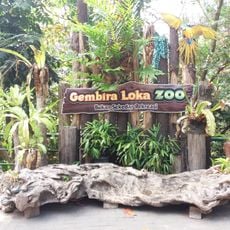
Gembira Loka Zoo
10.5 km
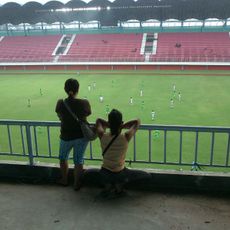
Maguwoharjo Stadium
5.8 km
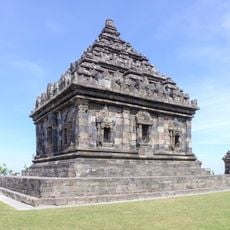
Ijo Temple
6.5 km
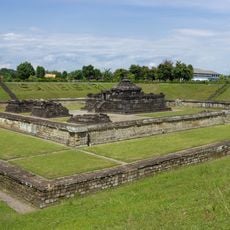
Sambisari
3.3 km
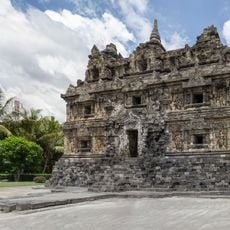
Sari Temple
2.1 km
Mandala Krida Stadium
11.2 km
Affandi Museum
9.2 km
Sajiwan
3.5 km
Banyunibo
4.8 km
Barong Temple
4.8 km
Gebang Temple
6 km
Dharma Wiratama Museum
11.3 km
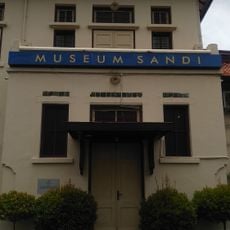
Sandi Museum
11.8 km
Kimpulan Temple
8.5 km
Grha Sabha Pramana
10.6 km
UGM Campus Mosque
10.5 km
Candi Dawangsari
4.6 km
Grhatama Pustaka
10.1 km
Yogyakarta City Library
11.5 km
Library of Engineering Faculty UGM
12 km
Situs dan Bangunan Candi Banyunibo
4.7 kmReviews
Visited this place? Tap the stars to rate it and share your experience / photos with the community! Try now! You can cancel it anytime.
Discover hidden gems everywhere you go!
From secret cafés to breathtaking viewpoints, skip the crowded tourist spots and find places that match your style. Our app makes it easy with voice search, smart filtering, route optimization, and insider tips from travelers worldwide. Download now for the complete mobile experience.
A unique approach to discovering new places❞
— Le Figaro
All the places worth exploring❞
— France Info
A tailor-made excursion in just a few clicks❞
— 20 Minutes