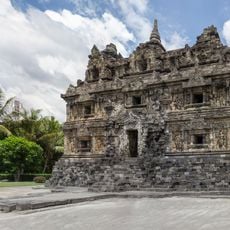
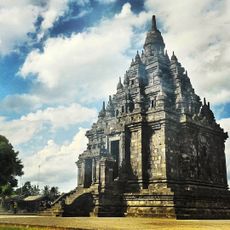
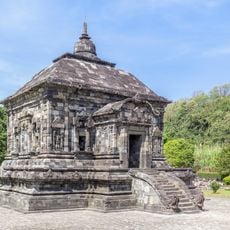
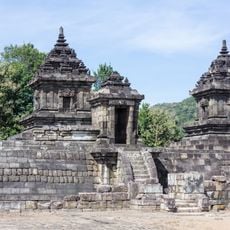
Situs dan Bangunan Candi Banyunibo, Buddhist temple site in Sleman, Indonesia
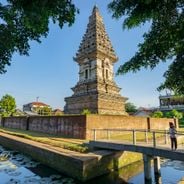
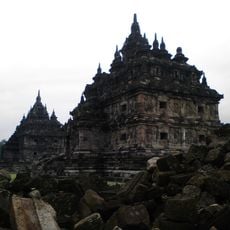
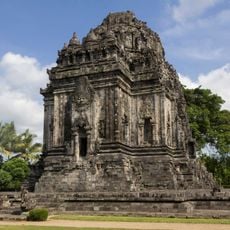
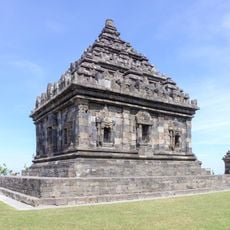
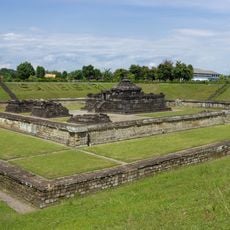
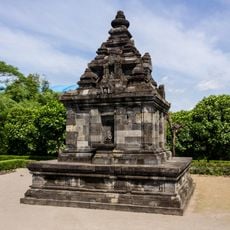
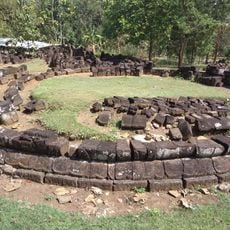
Banyunibo is a Buddhist temple in the Sleman region, featuring a central structure made of andesite stone with six smaller shrines positioned to its south and east. The entire site is bordered by a stone wall that faces north and runs along the perimeter of the complex.
The temple was built in the 9th century during the Ancient Mataram Kingdom, placing it among the region's earliest Buddhist structures. The site underwent major restoration work from 1940 to 1978 to bring it back to visible condition.
The temple walls show carved images of Hariti, a goddess linked to fertility in Buddhist belief, and Vaisravana, representing Buddhist religious art from medieval Java. These sculptures reveal how people expressed their faith through stone carving during that era.
The site sits surrounded by rice fields and sugar cane plantations, which means access involves traveling on rural paths and may depend on local farming activities. Visitors should wear appropriate footwear and prepare for local weather conditions, especially during rainy seasons.
The temple's name comes from bun, the Javanese word for a bird, and yubo, meaning to fall, so Banyunibo can be read as "falling bird." The main temple stands on a square base with a stepped, curving roof, and its inner chamber once held a stone image that is no longer in place.
The community of curious travelers
AroundUs brings together thousands of curated places, local tips, and hidden gems, enriched daily by 93,240 contributors worldwide.