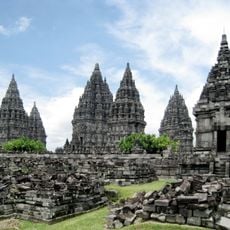
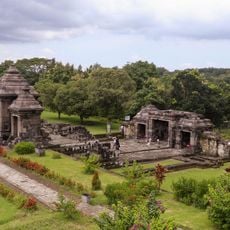
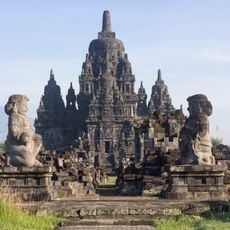
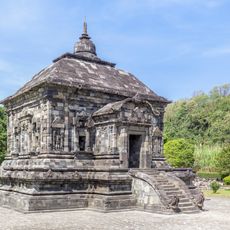
Kimpulan Temple, Hindu temple at Islamic University of Indonesia grounds, Yogyakarta, Indonesia
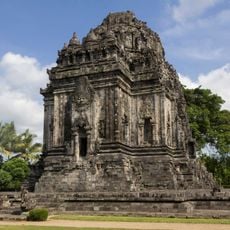
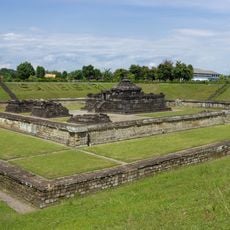
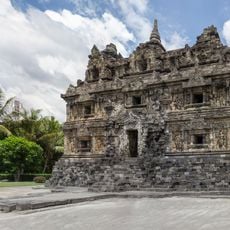
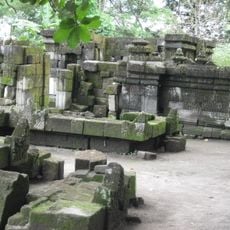
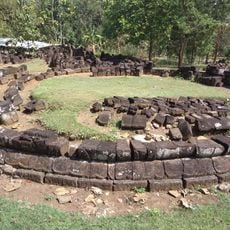
Kimpulan is a Hindu temple located within the grounds of the Islamic University of Indonesia in Yogyakarta. The structure features square andesite stone walls with carved religious sculptures visible at its partially excavated site.
Built between the 9th and 10th centuries during the Mataram Kingdom, Kimpulan is a Hindu Shaivite temple. It was buried about 5 metres deep by an eruption of Mount Merapi roughly a millennium ago, like Sambisari, Morangan and Kedulan. It was rediscovered on 11 December 2009 during foundation work for the UII library.
The temple's name Pustakasala, Sanskrit for "library", was proposed by the UII Wakf Foundation because the site was found where a university library was being built. The Ganesha statue found in the inner chamber supports the name: in Java, Ganesha is the god of learning, intellect and wisdom.
The site is located within a university campus and is not currently open to regular visitors. Archaeologists are conducting active excavation work, so access to the grounds remains restricted.
The temple displays architectural features that differ from typical Hindu designs found elsewhere in Central Java, suggesting it originally included wooden structural elements. These organic materials decayed over the centuries, leaving their mark on how the stone structure was ultimately shaped.
The community of curious travelers
AroundUs brings together thousands of curated places, local tips, and hidden gems, enriched daily by 93,197 contributors worldwide.