Tugu Yogyakarta, Historical monument in central Yogyakarta, Indonesia.
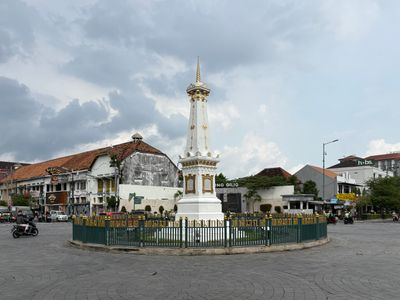
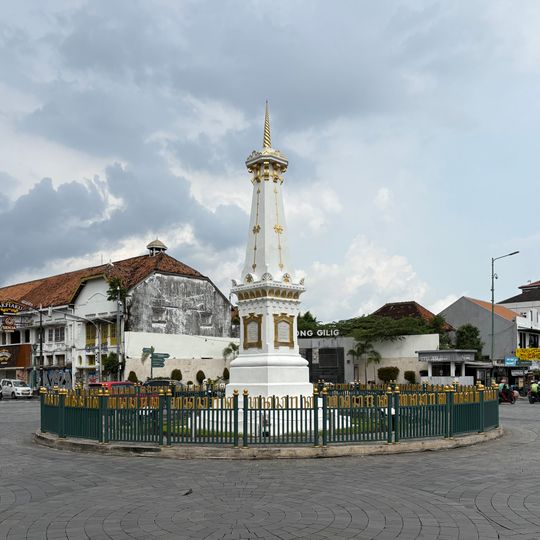
Tugu Yogyakarta is a white cylindrical monument in central Yogyakarta, Indonesia, standing approximately 15 meters tall on a square base. The top tapers into a cone crowned by a gilded sphere made of 22-carat gold, while a small park surrounds the intersection where the monument rises.
Sultan Hamengkubuwono I commissioned the original pillar in 1755 to mark the northern point of the sacred axis of his new capital. An earthquake destroyed the first structure in 1867, after which Dutch colonial authorities rebuilt it in 1889 with an altered form and reduced height.
The structure carries the name Tugu, meaning pillar, and marks the northern point of a sacred line through the city. Locals regard this axis as a connection between the palace, the monument, and Mount Merapi, giving the site a spiritual meaning that persists today.
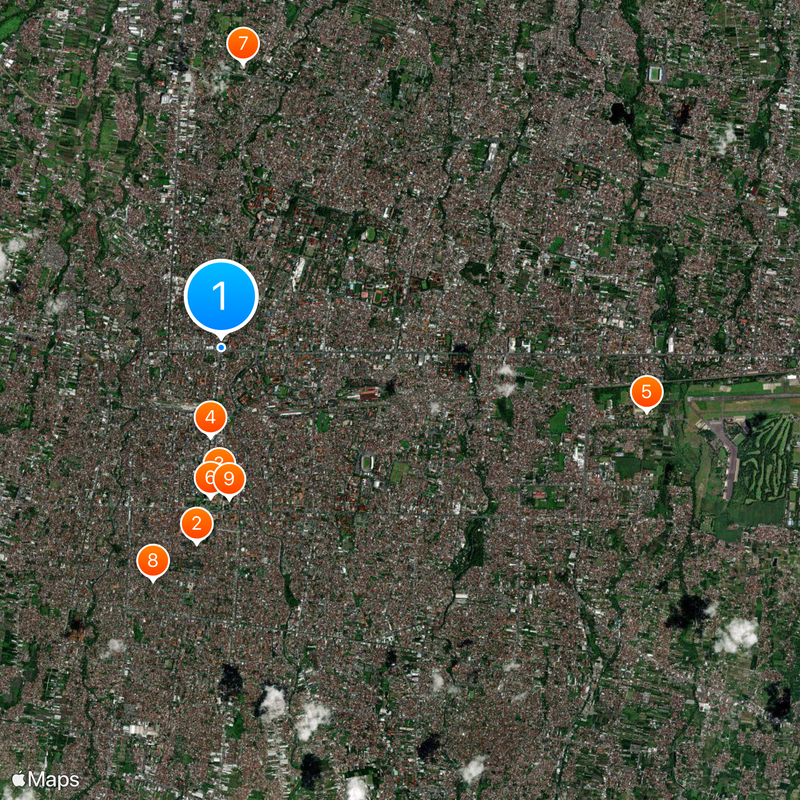
The monument stands at the crossing of Jalan Jenderal Sudirman and Jalan Mangkubumi and can be reached on foot from all sides. The surrounding park offers benches and shade, making the spot suitable for a short stop, especially in the early morning or late afternoon.
The original form was called Golong-Gilig and consisted of a continuous round pillar taller than the current structure. After the earthquake, Dutch engineers chose a different design with a square base and shortened shaft, creating the silhouette seen today.
The community of curious travelers
AroundUs brings together thousands of curated places, local tips, and hidden gems, enriched daily by 90,746 contributors worldwide.