Kauman Great Mosque, Royal mosque in central Yogyakarta, Indonesia
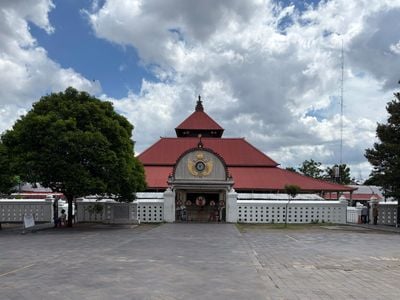
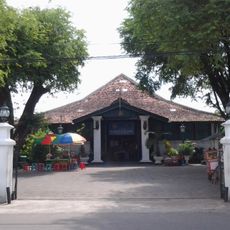
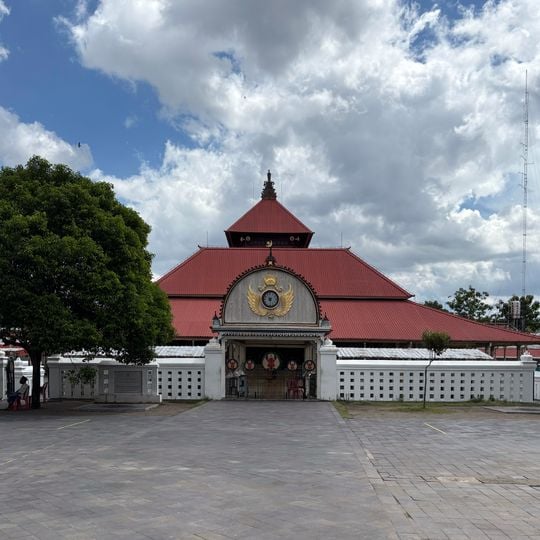
Kauman Great Mosque stands west of Yogyakarta's North Alun-alun, enclosed by high walls with its main gate, the Semar Tinandu, on the east. Its square main building carries a closed tajug roof in three tiers, crowned by a mustaka finial shaped like a kluwih leaf and a gada. The main floor is raised above an open rectangular serambi verandah, itself higher than the courtyard, with small pools along the verandah's north, east and south sides.
Sultan Hamengkubuwono I founded the mosque with Kyai Faqih Ibrahim Diponingrat, the court's first penghulu, and architect Kyai Wiryokusumo; construction began on Sunday Wage, 29 May 1773 (6 Rabiulakhir 1187 H). A veranda was added in 1775, doubled after the 1867 earthquake, and the roof was rebuilt in 1933.
The name Kauman refers to the neighborhood that grew around Islamic scholars who settled here long ago, and the area still carries that religious character today. Four times a year, the royal family joins the local community for special prayers accompanied by gamelan music, making the bond between Javanese court tradition and faith visible to anyone present.
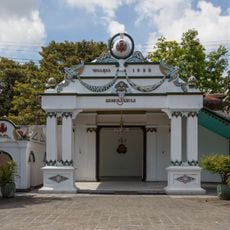
The main gate, gapura Semar Tinandu, is on the east side, with a second entrance on the north. The prayer hall floor is raised above the open serambi, which is itself higher than the courtyard, so steps separate each level. Small ponds run along the north, east and south sides of the serambi.
The main gate on the east side is called gapura Semar Tinandu, after Semar, the Javanese clown-servant figure who protects kings and knights. The name links the entrance to that guardian role rather than to any sultan.
The community of curious travelers
AroundUs brings together thousands of curated places, local tips, and hidden gems, enriched daily by 93,246 contributors worldwide.