Sambisari Temple, Hindu temple in Sleman, Indonesia
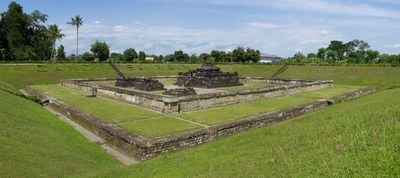
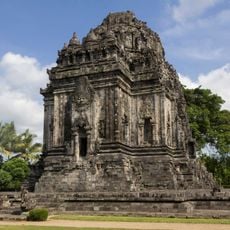
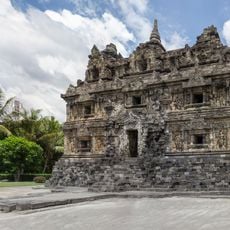
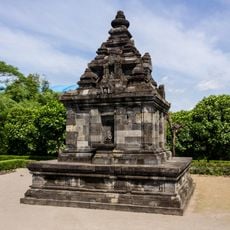
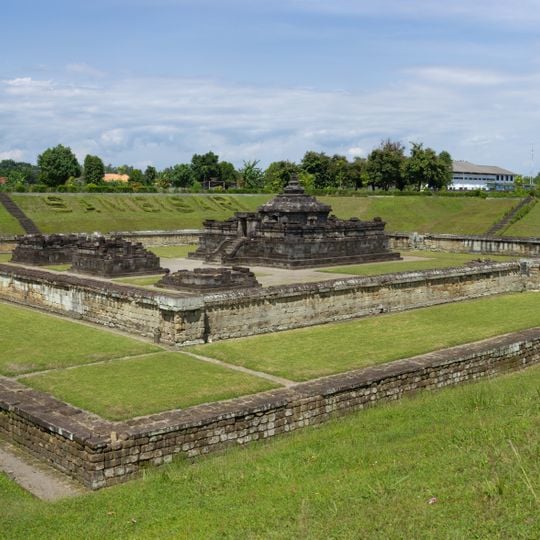
Sambisari is a 9th-century Shivaite Hindu temple in Sleman, Indonesia, with a main shrine measuring 13.65 by 13.65 meters and three smaller perwara temples in front of it. The complex sits in a sunken courtyard 6.5 meters below ground level, surrounded by two layers of stone walls. Visitors descend stairs on the western side to reach the main shrine, which faces west and stands on a square base about 2 meters high.
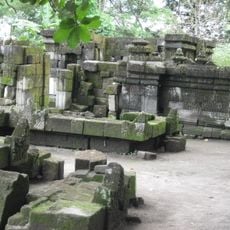
A farmer named Karyowinangun struck carved stone with his hoe in July 1966, revealing the temple buried under 6.5 metres of volcanic ash. Excavation and reconstruction ran until March 1987. A gold plate inscribed om siwa sthana and the Wanua Tengah III inscription point to construction around 812–838, possibly under Rakai Garung.
The name Sambisari comes from the hamlet where the farmer Karyowinangun struck carved stone in July 1966. The gold plate found in the compound bears the Sanskrit inscription "om siwa sthana", meaning homage to the making of a house for Shiva, written in Old Javanese script. The temple is a Shaivite sanctuary, and its name now marks the hamlet on maps of Sleman.
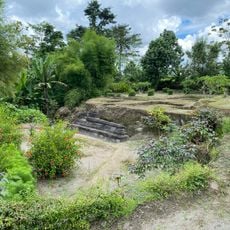
Visitors descend a staircase on the western side to reach the sunken courtyard, which lies 6.5 metres below the surrounding ground. The inner wall is 2 metres high and the gallery balustrade 1.2 metres, so the temple body is seen from above before you reach it. The outer wall's north-eastern section has been excavated; the rest remains buried.
This compound sits 6.5 meters below the current ground level, which sets it apart from most other temples across Indonesia. This subterranean position resulted from volcanic ash deposits that buried the shrine for centuries.
The community of curious travelers
AroundUs brings together thousands of curated places, local tips, and hidden gems, enriched daily by 95,305 contributors worldwide.