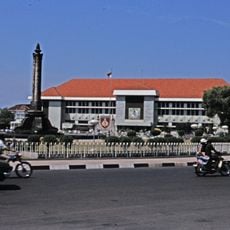
Ranggawarsita Museum, Ethnographic museum in Semarang, Indonesia.
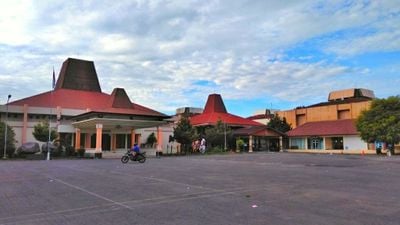
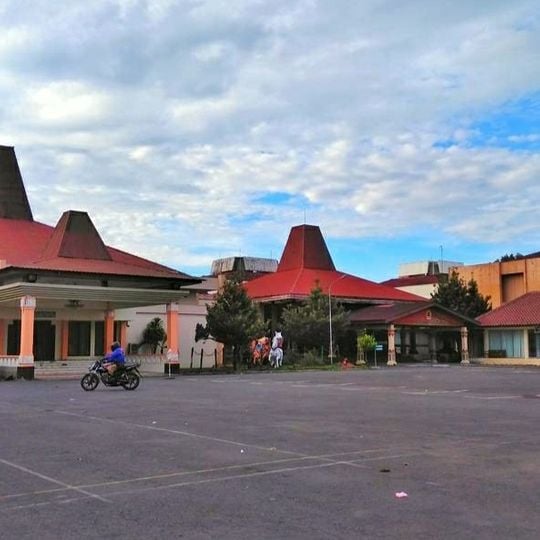
Ranggawarsita Museum is a state museum on Jalan Abdul Rahman Saleh in Kalibanteng Kulon, Semarang, near Ahmad Yani airport. Its roughly 20,580 m² site holds four two-storey buildings: A for geology, geography and palaeontology; B for Hindu-Buddhist, Islamic and ceramic collections; C for independence-era dioramas; and D for technology, numismatics and Javanese performing arts.
Construction began in 1977 on land near Ahmad Yani International Airport, funded by the regional budget. Building C opened first, and Governor Soepardjo Rustam inaugurated the museum on 2 April 1983. A 1987 decree made it a technical unit of the Ministry of Education and Culture, and a 1990 decree gave it the name Ranggawarsita, after the Surakarta poet Raden Ngabehi Ranggawarsita.
The museum is named after Raden Ngabehi Ranggawarsita, the last poet of the Surakarta Hadiningrat court. Building B displays batik motifs from Surakarta, Pekalongan, Lasem and Banyumasan, alongside a miniature of the Demak Great Mosque and a hand-written Qur'an. Building D holds wayang, kuda lumping and barongan performance items.
The museum sits on Jalan Abdul Rahman Saleh No. 1 in Kalibanteng Kulon, near Ahmad Yani International Airport. Exhibits are arranged across four two-storey buildings, A to D, plus a gold room and a 3D audiovisual room. Start with Building A and work through to D to follow the thematic order.
A meteorite found in Mojogedang in 1984 is displayed here and connects science with local craftsmanship. This piece shows the region's link to cosmic history, and local craftspeople even incorporated meteorite metal into their traditional weapons.
The community of curious travelers
AroundUs brings together thousands of curated places, local tips, and hidden gems, enriched daily by 94,110 contributors worldwide.