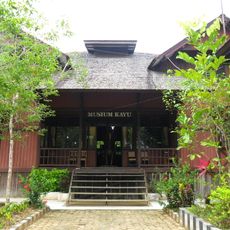
Mulawarman Museum, State museum in Tenggarong, Indonesia
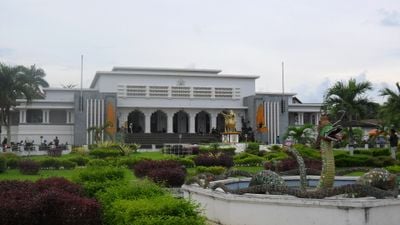
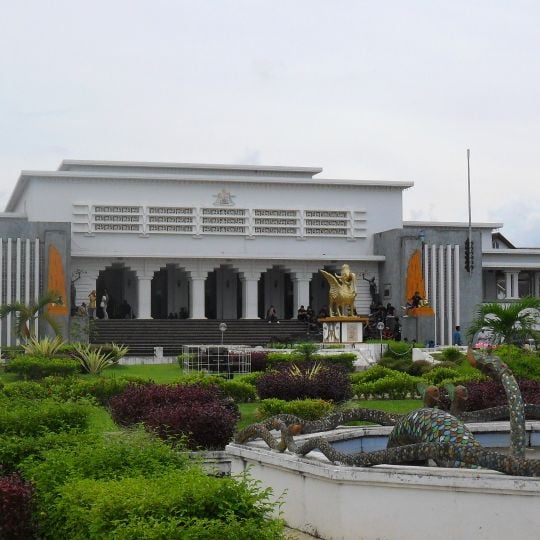
The Mulawarman Museum is a former palace in Tenggarong that now displays artifacts, historical statues, and furnishings from different periods. The rooms are organized by theme and show Ming ceramics, ceremonial objects, and other items connected to the sultanate's past.
The palace was built by the Dutch concrete firm Hollandsche Beton Maatschappij in 1935, during Sultan Aji Mohammad Parikesit's reign, and finished in 1938. In August 1964 a mob burned the sultan's regalia in the courtyard; the building was sealed rather than destroyed. It opened as the Kutai Museum on 25 November 1971 and was renamed Mulawarman in 1979.
The museum displays the sultan's throne and traditional textiles that reflect the identity of the Kutai Kartanegara kingdom. These objects show what the sultanate meant to local people and how it shaped the region's story.
The museum sits right beside the river and is easy to reach from Samarinda. Visitors should know that opening hours change depending on the day of the week, so checking ahead before your visit makes sense.
The Lembuswana statue in the front yard is a copy; the original, made in Burma in 1850, reached the Kutai palace in 1900. It depicts the mount of Batara Guru, a creature with an elephant's face, bird's wings, cow's horns and a rooster's spurs. In August 1964 a mob burned the sultan's regalia in the courtyard and toppled a flagpole over 30 m tall.
The community of curious travelers
AroundUs brings together thousands of curated places, local tips, and hidden gems, enriched daily by 94,794 contributors worldwide.