Drysdale River National Park, Nature reserve in Kimberley region, Australia.
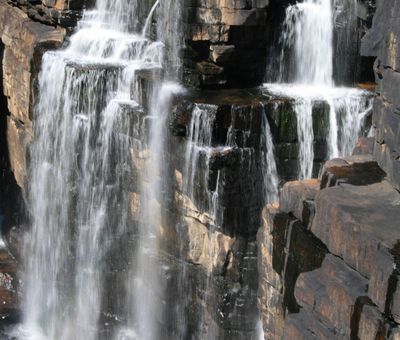
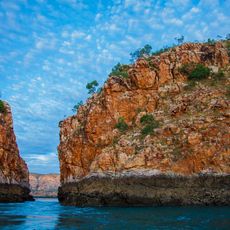
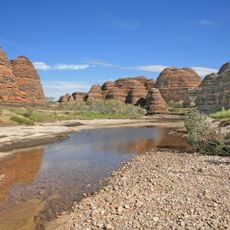
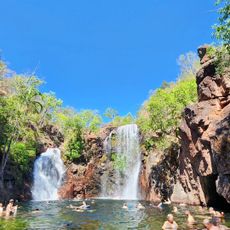
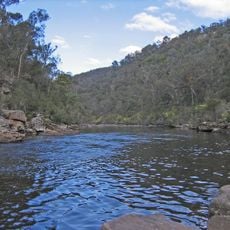
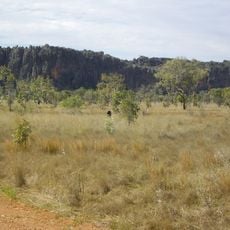
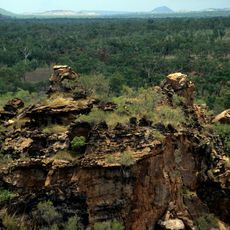
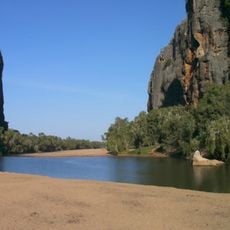
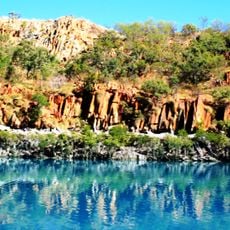
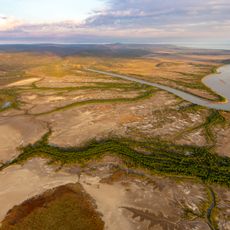
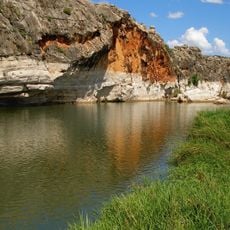
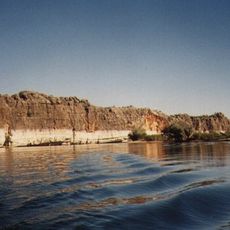
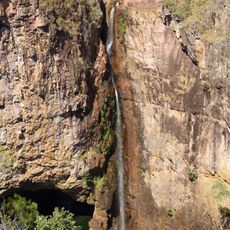
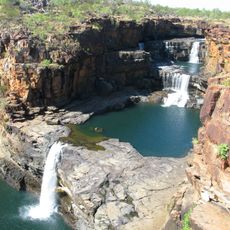
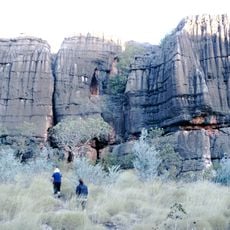
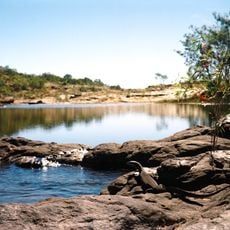
Drysdale River National Park is a nature reserve in the Kimberley region featuring open woodlands, deep gorges, high cliffs, and multiple waterfalls scattered throughout. The landscape is shaped by the river system that flows through it, creating permanent pools and dramatic rock formations along the way.
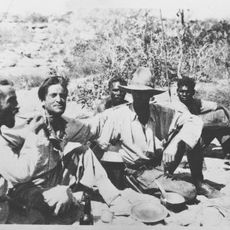
The first European recorded in the area was C. A. Burrowes, a surveyor with a squatting company, in 1886. Brockman and Crossland made separate expeditions in 1901, and further expeditions followed in 1903, 1911–1912, 1921 and 1954. The 1954 expedition built the first vehicular track from Gibb River Station to Kalumburu and discovered Morgan Falls. The park was gazetted on 27 September 1974, using boundaries proposed in 1955 by the Australian Academy of Science committee on national parks.
Indigenous Australian artworks known as Bradshaw paintings cover the rock faces near the permanent waterholes along the Drysdale River. These images show the deep connection between the land and the Aboriginal people who have lived in this region for thousands of years.
No public road reaches the park; access is via a track from Carson River Station off the Kalumburu Road. Permission must be obtained from the Kalumburu Aboriginal Corporation before entering. There are no visitor facilities, marked trails or ranger patrols, and no food, fuel or mechanical services at the park or at Carson River Station.
The park holds some of the earliest traces of human presence in Australia: Aboriginal rock art, including Bradshaw figures and Wondjina paintings, dated at 10,000 to 40,000 years old. Many of these well-preserved works lie along the banks of the Drysdale River.
The community of curious travelers
AroundUs brings together thousands of curated places, local tips, and hidden gems, enriched daily by 93,445 contributors worldwide.