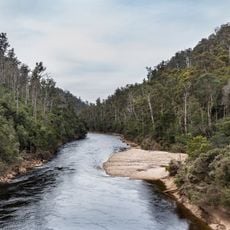
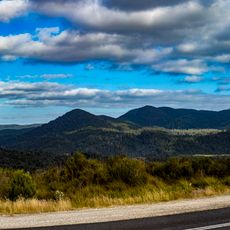
Mount Bischoff, Mountain summit in Tasmania, Australia
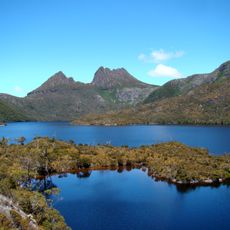
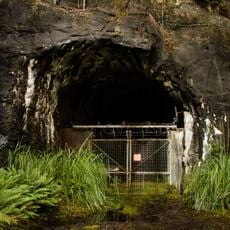
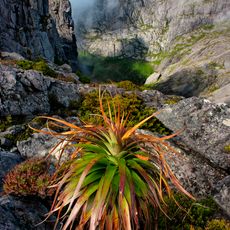
Mount Bischoff is a 785-metre mountain in north-western Tasmania, just north-west of Waratah and beside Savage River National Park. It was named after James Bischoff, chairman of the Van Diemen's Land Company. Its face has been cut by open-cut tin workings that absorbed the old underground mine, and ore was trucked 80 kilometres to the Renison Bell plant.
The discovery of tin deposits in 1871 by James Smith sparked the development of one of the world's richest tin mines at this location. This find led to rapid growth in the surrounding region and the establishment of nearby mining settlements.
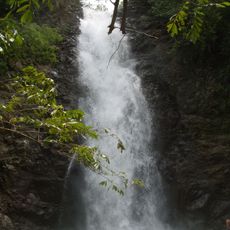
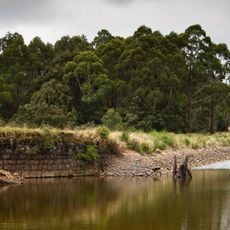
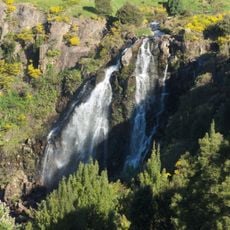
The mountain is named after James Bischoff, chairman of the Van Diemen's Land Company, though a German-language account instead credits Shawn Bischoff. Tin was found there in 1871 by James "Philosopher" Smith, and the find drew miners to the settlement of Waratah at the foot of the falls. The mine's sluice was fed with water from the top of Waratah Falls.
Mount Bischoff lies about 785 m high northwest of Waratah, reached via the Waratah Branch railway route that ran from Guildford Junction between 1900 and 1940. The old workings were reworked as a large open cut from 2008, with ore trucked 80 km to the Renison Bell plant; by 2015 the mine was on care and maintenance while exploration continued. Check current land status before travelling.
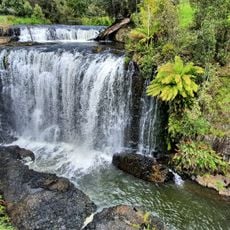
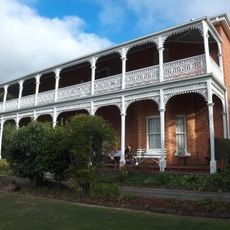
In June 1883 the Mount Bischoff mine installed one of Australia's first hydro-electric generators, using water from the Waratah waterfall to light the offices, workshop and manager's house. Ore was later trucked 80 km to the Renison Bell plant, and in 2009/10 the open-cut yielded 6,267 tonnes of tin in concentrate.
The community of curious travelers
AroundUs brings together thousands of curated places, local tips, and hidden gems, enriched daily by 94,409 contributors worldwide.