Hindmarsh Square, public square in Adelaide, South Australia
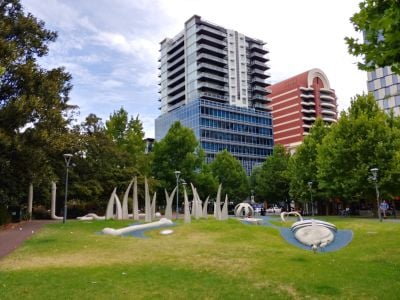
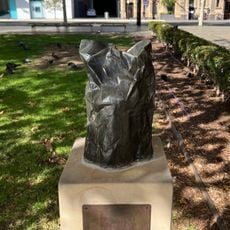
Hindmarsh Square is a public square in the north-eastern quarter of Adelaide city centre, transected by Pulteney and Grenfell streets into four quadrants. Its north-western quadrant, known as Emo Park, contains a playground with four oversized sculptures: a tap, hose, thong and fish bones, made by Ryan Sims and Gerry Wedd with landscape architects Taylor Cullity Lethlean. The square has lawns, curving paths and tall trees.
Colonel William Light included the square in his 1836 "Plan of Adelaide", and the Street Naming Committee named it after Governor John Hindmarsh on 23 May 1837. In March 2003 the City of Adelaide gave it the Kaurna name Mukata, later corrected from Mogata, after one of the four wives of the Kaurna elder Mullawirraburka.
The square carries two names: Hindmarsh Square and Mukata, a word from the Kaurna people who originally inhabited this land. This dual naming reflects how the city honors both colonial and indigenous history in its public spaces.
The square is easy to reach on foot and sits near shops, cafes, and offices in the downtown area. Daytime visits work best when the pathways are open and the surroundings feel active.
The north-western quadrant is nicknamed "Emo Park" because young people of the emo subculture gather there. It holds four oversized sculptures — a tap, a hose, a thong and fish bones — made by artists Ryan Sims and Gerry Wedd with landscape architects Taylor Cullity Lethlean, who built a playground around them.
The community of curious travelers
AroundUs brings together thousands of curated places, local tips, and hidden gems, enriched daily by 94,252 contributors worldwide.