Bridgewater Bridge, Heritage transport bridge in Bridgewater, Tasmania, Australia
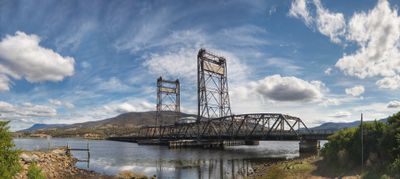
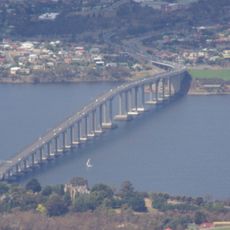
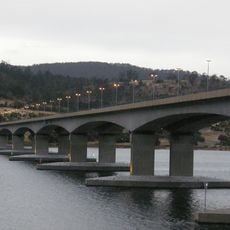
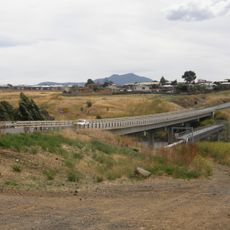
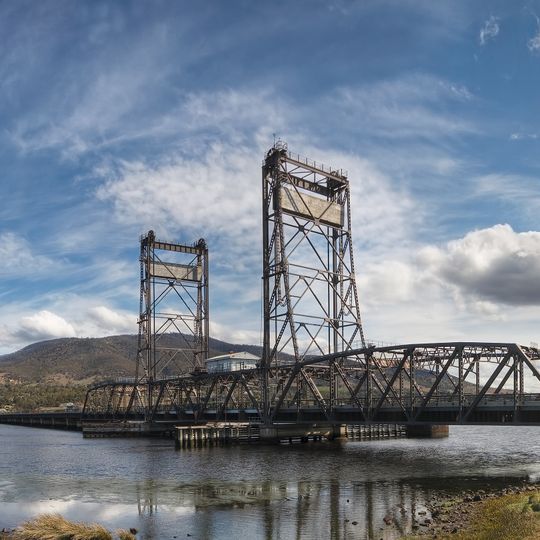
Bridgewater Bridge spans across the River Derwent and serves multiple forms of transport including trains, vehicles, and pedestrians on the same structure. The deck features separated lanes for different types of movement, with a vertical-lift section in the middle that raises to allow ships to pass.
Construction of the steel lift bridge began in 1939, was interrupted by the Second World War, and the bridge opened in 1946. It replaced a 1874 swing bridge that had been converted to road use in 1908. The lift span was designed for a 100-year service life.
The bridge gave its name to the suburb of Bridgewater on the northern bank. Until 1984, Australian Newsprint Mills at Boyer moved all its paper products by river, so a bridge keeper lived on the bridge to open and close the lift span for passing ships; the keeper's cabin still stands on the lift span.
The bridge can be accessed directly by vehicles, trains, and pedestrians, with each type of traffic in separate areas. You should know that the lifting section occasionally raises for boats to pass, which may cause brief pauses in vehicle movement.
The 1946 lift span was designed to last 100 years, and a small bridge keeper's hut on the deck once housed the switches and valves for raising it. A keeper lived on the bridge while paper barges from the Australian Newsprint Mills at Boyer needed frequent openings; shipping ceased in 1984. In 2006 a partial fatigue fracture in a steel cable of one of the two 170-tonne concrete counterweights forced a temporary closure.
The community of curious travelers
AroundUs brings together thousands of curated places, local tips, and hidden gems, enriched daily by 93,471 contributors worldwide.