Hobart Zoo, Zoo in Battery Point and Queens Domain, Australia
Hobart Zoo, also called Beaumaris Zoo, began in 1895 at the Battery Point residence of Mary Grant Roberts and moved to a fenced site on the Queen's Domain after the Hobart City Council took over the collection in 1922. The Domain grounds held a large pond for water birds, aviaries, animal enclosures and runs, a curator's office and a tea kiosk, with views across the River Derwent. A pair of African lions came from Taronga Park Zoo.
Mary Grant Roberts opened Beaumaris Zoo in 1895 at her Battery Point home, running it until her death in 1921. The Hobart City Council took over the collection in 1922 with a £250 annual state subsidy and built new gardens on the Queen's Domain, where curator Arthur Reid oversaw the transfer. The zoo closed in 1937 and the site later became a council depot.
The zoo served as a place where people could encounter Tasmanian devils and other native species up close. Educational programs helped visitors develop a deeper appreciation for animals that lived in their own region.
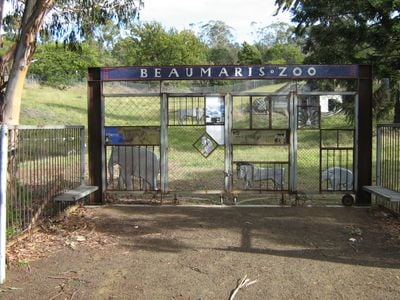
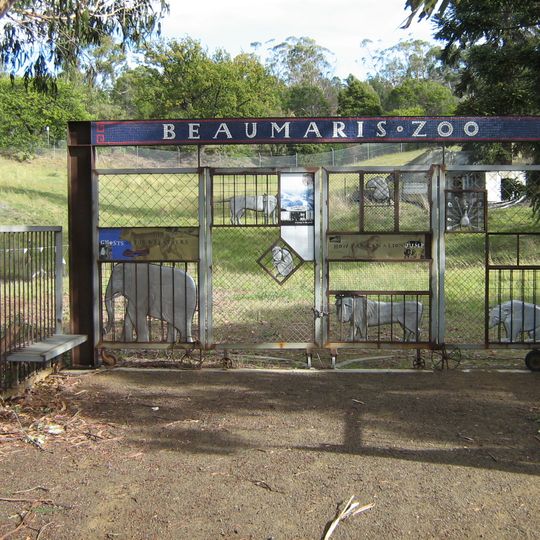
The site on the Queen's Domain now serves mainly as a Hobart City Council depot, so access is limited to what can be seen from outside. Remnants and archaeological remains of the original zoo are still visible. The gate carries a blue "BEAUMARIS ZOO" sign, and a short wooden bench stands beside a grassy slope at the left.
The thylacine filmed here in 1936 died on 7 September after being locked out of its sleeping enclosure, a death attributed to exposure and suspected neglect. Since 1996 Australia has marked that date as National Threatened Species Day.
The community of curious travelers
AroundUs brings together thousands of curated places, local tips, and hidden gems, enriched daily by 94,078 contributors worldwide.