Moulting Lagoon Important Bird Area, Protected wetland at Great Oyster Bay, Tasmania, Australia
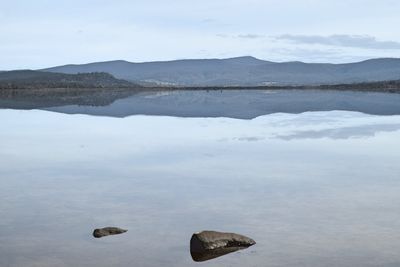
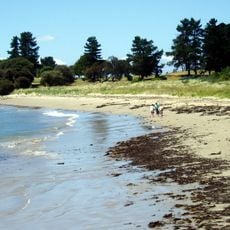
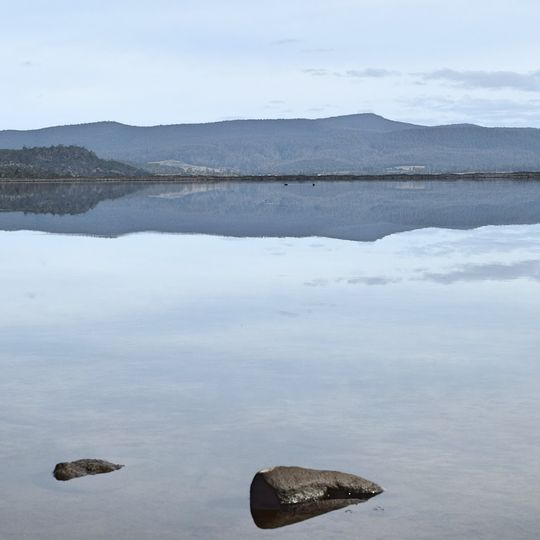
Moulting Lagoon is a coastal lagoon, a largely enclosed estuary formed at the mouths of the Swan and Apsley Rivers, whose combined catchment covers 900 km2, and sheltered from the ocean by Nine Mile Spit. It holds areas of deep and shallow water, bordered by tidal mudflats and saltmarsh, with Zostera seagrass covering about 25 km2 of the lagoon bed. The adjacent Apsley Marshes store and filter floodwater from the Apsley River before releasing it gradually into the lagoon.
The site gained international recognition as a Ramsar wetland in 1982, a major step in protecting it. This status committed Australia to preserving the area's natural features for the future.
The Oyster Bay Tribe used the lagoon extensively before European settlement in the early 19th century, especially for harvesting swan eggs. By the late 1820s most arable land in the region had been taken by settlers. Later the lagoon became a popular site for waterfowl hunting, particularly of chestnut teal and Australian shelduck.
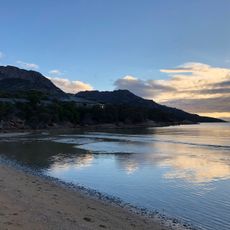
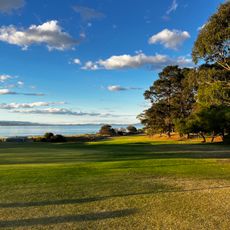
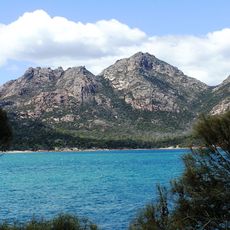
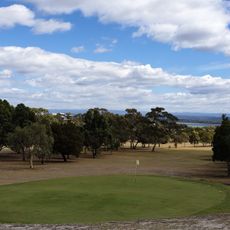
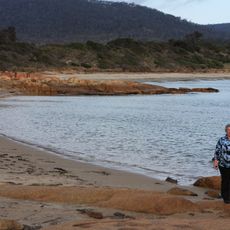
The lagoon lies between Swansea and Bicheno, at the base of the Freycinet Peninsula; the western shore is cleared farmland, while native vegetation remains on the eastern shore. Tidal range runs from 0.3 m in the upper reaches to 0.8 m at the mouth, and salinity in hot, dry weather can reach twice that of seawater. Seasonal duck hunting still takes place over much of the game reserve.
The lagoon supports over 1% of the world population of pied oystercatchers as well as black swans, and it holds Tasmania's largest flock of common greenshanks. BirdLife International identified the 63 km2 site as an Important Bird Area for these numbers.
The community of curious travelers
AroundUs brings together thousands of curated places, local tips, and hidden gems, enriched daily by 94,783 contributors worldwide.