Jindabyne Dam, Embankment dam in Snowy Mountains, Australia
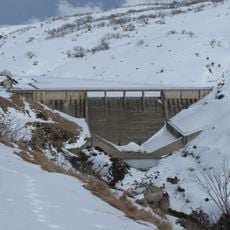
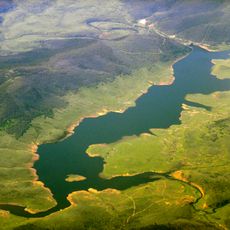
Jindabyne Dam is an embankment structure in the Snowy Mountains that created a large reservoir by damming the Snowy River. The structure functions as part of a larger water management system serving southeastern Australia.
Completed in 1967, Jindabyne Dam was built by a Utah-Brown and Sudamericana consortium to engineering plans from the Snowy Mountains Hydroelectric Authority, as one of sixteen major dams of the Snowy Mountains Scheme (1949–1974). Its reservoir flooded Old Jindabyne, a settlement of about 300 people; remains appear when Lake Jindabyne is low, and East Jindabyne stands above the old site.
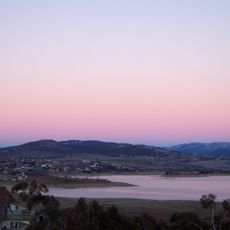
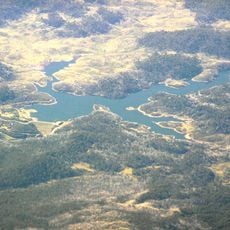
Lake Jindabyne takes its name from the town it submerged; when water levels drop, remnants of Old Jindabyne, home to about 300 people, reappear. The reservoir receives the Snowy, Thredbo and Eucumbene rivers, and inflows peak in October and November.
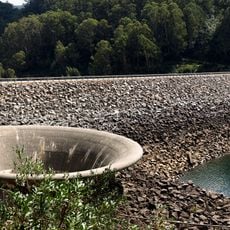
The dam wall stands about 2 km south-south-east of Jindabyne, reached from the town by road; the wall is 335 m long and 72 m high. The 1.1 MW generator runs during environmental releases into the Snowy River, so flows below the dam vary with those releases. The spillway was modified from 1994 onward, with work still under way in 2009.
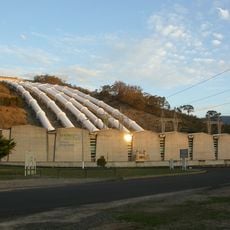
The Jindabyne pumping station lifts water from the Snowy River into the Snowy-Murray tunnel, sending it west through the Murray 1 and Murray 2 power stations before it reaches the Swampy Plains River and then the Murray. Flows into Lake Jindabyne are strongest in October and November.
The community of curious travelers
AroundUs brings together thousands of curated places, local tips, and hidden gems, enriched daily by 93,389 contributors worldwide.