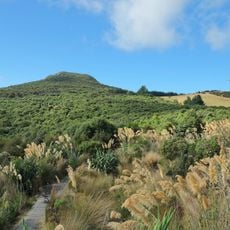
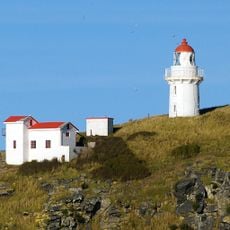
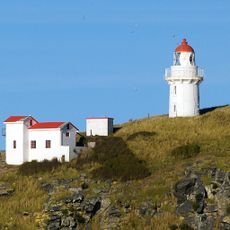
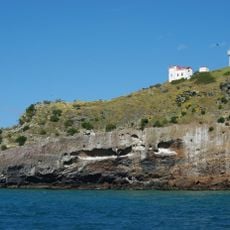
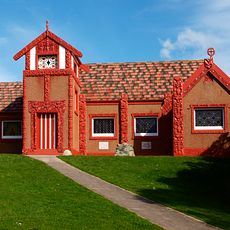
Whareakeake, Sandy beach near Dunedin, New Zealand
Whareakeake is a sandy beach on the Otago Peninsula near Dunedin, stretching roughly 630 meters between two rocky points. The shore features a right-hand point break that creates waves suitable for surfing along the coastline.
Whareakeake was a Māori kāinga nohoanga and mahinga kai until the Sealers' War incident of December 1817, when chief Te Matahaere's people attacked James Kelly's party from the sealing ship Sophia and killed the settler William Tucker, who had run a hei-tiki trade from a house there. The village was burned and abandoned, a tapu was lifted in the 1860s, and the 1863 survey map labelled the beach "Murdering Beach" until the name Whareakeake was restored in 1998.
Whareakeake was a kāinga nohoanga and kāinga mahinga kai, a Māori place of residence and food production, as Taare Wetere Te Kahu told the 1879 Royal Commission. Excavations in the sand dunes uncovered fish-hooks, weapons and amulets now used as type specimens of the Classic Māori period, and the 1880s and 1890s yielded an unrivalled quantity of pounamu artefacts.
Access to the beach requires driving down a steep one-lane gravel road to the eastern end, where parking is limited. It's wise to bring supplies and check conditions before visiting, as facilities on site are minimal.
In 1863 a medal handed out by Captain James Cook on his second voyage was found in the surface layer at Whareakeake, most likely traded from Queen Charlotte Sound for pounamu. The 1880s and 1890s excavations also yielded an unrivalled quantity of pounamu artefacts.
The community of curious travelers
AroundUs brings together thousands of curated places, local tips, and hidden gems, enriched daily by 93,403 contributors worldwide.