Green Hill, Volcanic cone in East Tāmaki, New Zealand.
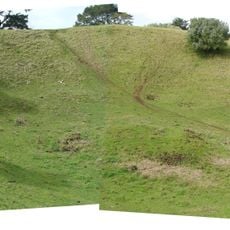
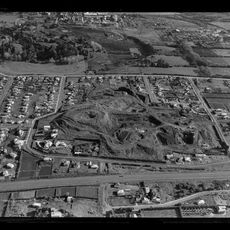
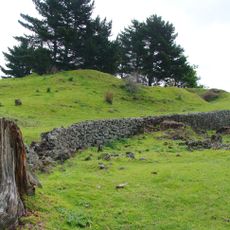
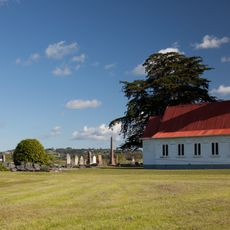
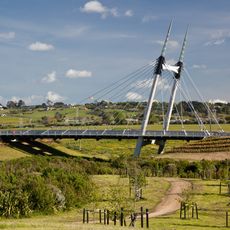
Green Hill, also called Mātanginui, is a scoria cone in East Tāmaki that erupted about 20,000 years ago and originally rose 78 metres above sea level. Quarrying from around 1870 removed almost the entire hill by the 1960s. Between 2006 and 2016 clean fill was used to recreate a hill, planned as a 70-metre-high flat-topped grass hill.
Mātanginui was a Ngāi Tai ki Tāmaki settlement and pā, occupied until the early 19th century; the name means either "The Pā Taken with Much Crying" or "Big Breeze". The Styak family later farmed the hill and named it after Mrs Styak's home, Green Bank, in Randalstown, Northern Ireland. Quarrying began around 1870 and by the 1960s had removed almost the entire hill; the quarry became a landfill in 1979, closed in 2005, and from 2006 to 2016 clean fill recreated a hill.
The name Mātanginui translates either as "The Pā Taken with Much Crying" or "Big Breeze". The ancestor Toi-te-huatahi visited the site and planted a grove of karaka trees. By the 16th century, the volcanic soil supported stonefield gardens around a defensive pā on the peak, and Ngāi Tai occupied the hill until the early 19th century.
The former quarry and landfill is not open as a park; the site is fenced off while it is redeveloped into an urban park with a 70-metre flat-topped grass hill. The hill itself was almost entirely quarried away by the 1960s, so there is no summit track to follow. Check with Auckland Council before planning a visit.
The site was once a landfill that produced so much methane gas it powered an energy plant starting in 1992. This surprising use shows how the location served different purposes over the decades.
The community of curious travelers
AroundUs brings together thousands of curated places, local tips, and hidden gems, enriched daily by 93,442 contributors worldwide.