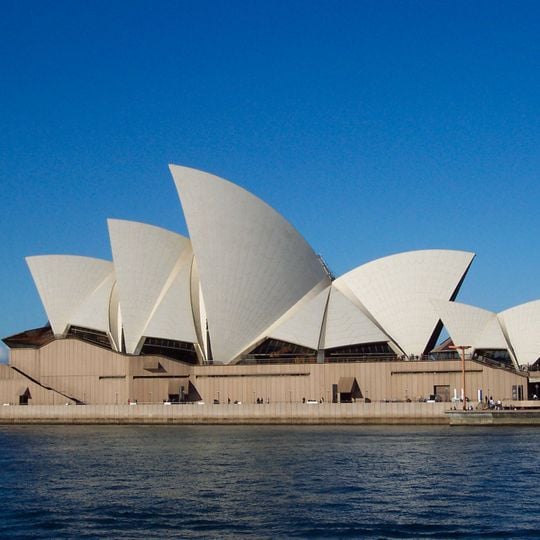
Sydney Opera House
Sydney Opera House, Opera house in Sydney, Australia
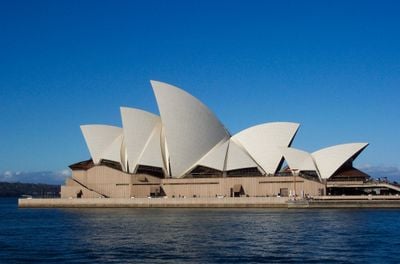
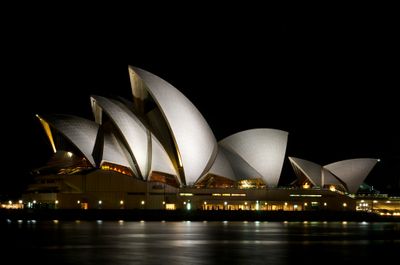
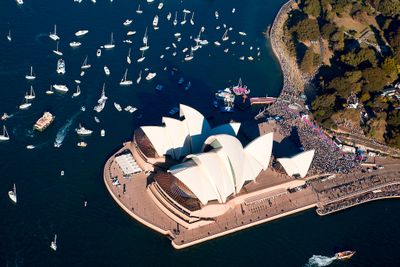
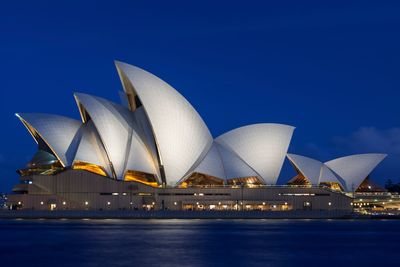
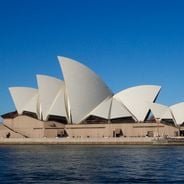
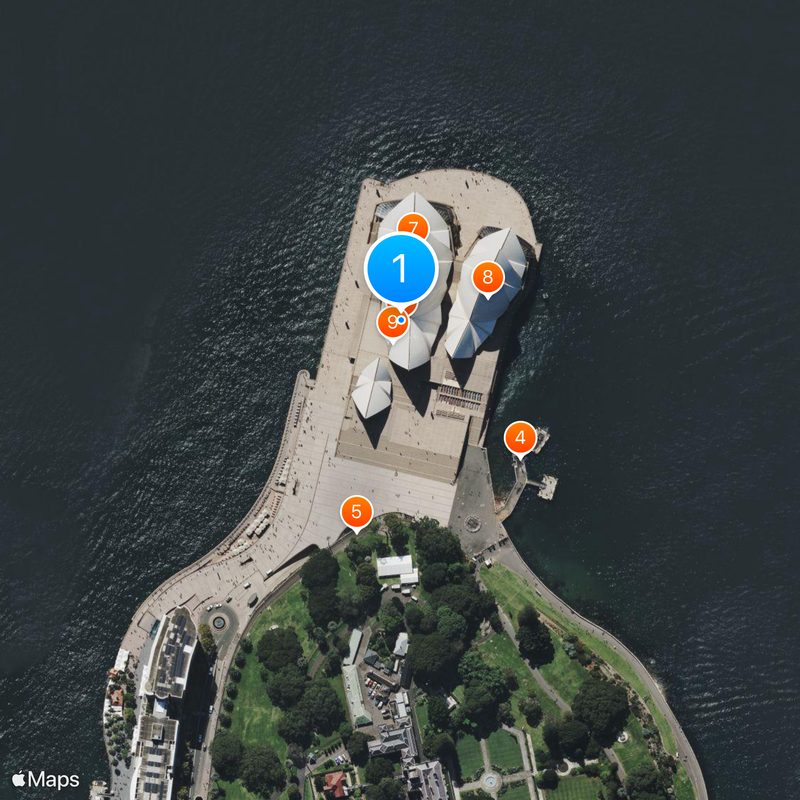
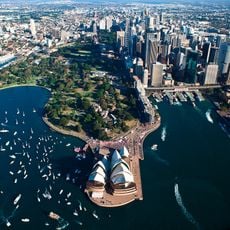
The complex consists of a series of interlocking shell-shaped roof structures covered with over one million Swedish ceramic tiles, rising 67 meters above sea level on Bennelong Point, while the interior contains multiple performance halls, restaurants and public spaces spread across the waterfront site.
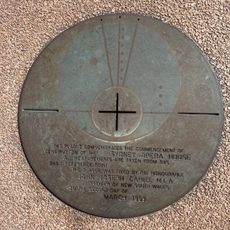
Construction began in 1959 following an international competition won by Danish architect Jørn Utzon in 1957, who departed the project in 1966 amid disputes with government officials, after which an Australian team completed the interior work until Queen Elizabeth II officially opened the venue in 1973, with UNESCO inscribing the site as World Heritage in 2007.
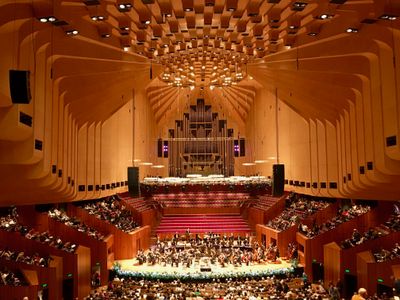
The complex serves as the primary home for Opera Australia, the Australian Ballet, Sydney Theatre Company and Sydney Symphony Orchestra, presenting over 1,500 performances annually to approximately 1.2 million attendees from across the nation and internationally.
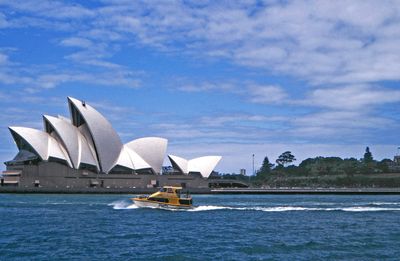
Visitors reach the site via Circular Quay using trains, ferries or buses, while the building opens daily from 9am to 5pm for self-guided exploration, with one-hour guided tours available in eight languages and performance tickets ranging from 40 to several hundred dollars depending on the event and seating.
Utzon discovered the geometric solution for the shells in 1961 when he realized all segments could come from a single sphere with a 75-meter radius. This insight allowed the production of 2194 identical precast concrete ribs and resolved the structural problem that had blocked progress for years.
Location: City of Sydney
Inception: 1973
Architects: Jørn Utzon, Peter Hall
Official opening: October 20, 1973
Architectural style: expressionist architecture
Capacity: 5738
Elevation above the sea: 15 m
Height: 67 m
Accessibility: Wheelchair accessible
Address: 2 Circular Quay East, Sydney NSW
Phone: +61292507111
Website: https://sydneyoperahouse.com
GPS coordinates: -33.85706,151.21490
Latest update: December 2, 2025 21:46
20th and 21st-century architecture has transformed city centers with structures that push engineering boundaries. Observation towers like the Seattle Space Needle and experimental residential complexes like Habitat 67 in Montreal demonstrate the evolution of construction techniques. Architects have explored new forms using materials such as steel, glass, and concrete, creating structures that meet the growing demands of metropolitan areas. This collection includes buildings that marked their time with innovative design. In Barcelona, Antoni Gaudí's Casa Milà features a wavy facade that breaks traditional norms, while in London, 30 St Mary Axe incorporates energy-saving technologies into its 180-meter structure. From Bilbao's Guggenheim Museum clad in titanium to artificial islands shaped in the Persian Gulf in Dubai, these projects illustrate the diversity of architectural approaches worldwide. Each building reflects its urban context while offering solutions to technical and functional challenges of its era.
This collection presents significant architectural works from different periods and continents. From medieval cathedrals to contemporary skyscrapers, the selection documents the technical and aesthetic development of building design. The listed buildings were created by influential architects and have shaped the evolution of modern architecture. The list includes religious structures such as Gothic churches and monasteries, public facilities like museums and concert halls, and residential buildings that established new construction standards. Each building demonstrates particular structural solutions or stylistic features that contribute to understanding architectural history. The selection offers insights into various building styles, materials and construction methods.
These opera houses represent international music culture. The buildings display architectural styles from baroque to modern. The halls provide optimal acoustic conditions for opera performances. The theaters are located in cities like Paris, New York and Sydney. The buildings function as centers of cultural life in their cities.
This collection brings together major technical achievements that have marked the history of modern engineering. From the Hoover Dam on the Colorado, built in 1936 to produce hydroelectric power, to the ITER nuclear fusion project in France, which represents the future of energy research, these structures exemplify human boldness and skill. Each structure serves a specific purpose: crossing natural obstacles like the Brooklyn Bridge, connecting Manhattan to Brooklyn since 1883, facilitating maritime trade with the Panama Canal between the Atlantic and Pacific, or pushing height limits with the Burj Khalifa at 828 meters. These achievements are visited around the world and often offer remarkable experiences. The Eiffel Tower welcomes 7 million visitors each year who ascend to discover Paris from its 324-meter height. Shanghai's Maglev allows travel at 430 kilometers per hour thanks to magnetic levitation. The Millau Viaduct crosses the Tarn Valley at 343 meters above sea level over 2,460 meters in length. These engineering landmarks invite understanding of how industrial architecture has shaped our modern world, combining functional necessity with technical prowess that continues to fascinate visitors worldwide.
Circular architecture has fascinated builders since ancient times. This collection brings together Roman amphitheatres like the Colosseum, medieval towers such as the Round Tower in Copenhagen, baroque domed structures and modern constructions. The circular form offers practical advantages for acoustic properties, structural stability and optimal space usage. The selected buildings serve various functions: religious temples, fortifications, observatories, museums and event venues. Each example demonstrates how architects have adapted the circular form to local conditions and cultural requirements. From ancient stone structures to contemporary skyscrapers, this selection documents technical evolution across centuries.
The most important opera houses of the 19th century form an architectural group that reflects the history of classical music. These buildings, located in major world capitals, showcase various styles: neoclassical, neobaroque, modern. Their architectures reflect the evolution of acoustic techniques and performing arts. From the Teatro San Carlo in Naples to the Palais Garnier in Paris, these buildings are references in theatrical architecture.
In 2007, the New Seven Wonders Foundation, led by Swiss businessman Bernard Weber in cooperation with the marketing company Deureka, organized a global vote, the results of which were announced on July 7 in Lisbon. This project, which was especially successful in India and China, enabled the designation of seven monuments representing different civilizations and eras, from antiquity to the 20th century. UNESCO stated in a release that it was not involved in this event, contrary to what many voters believed. The final selection includes sites across all continents: the Great Wall of China, a fortification system built over several centuries; Petra in Jordan, a Nabataean city from the 4th century BC carved into rose-colored rock; the Colosseum in Rome, a 1st-century amphitheater capable of holding 50,000 spectators; Chichen Itza in Mexico, a Maya site demonstrating the astronomical knowledge of this civilization; Machu Picchu in Peru, an Inca city from the 15th century located at 2,430 meters above sea level; the Taj Mahal in India, a white marble mausoleum built between 1631 and 1643; and the Christ Rédempteur statue in Rio de Janeiro, a 38-meter-tall monument inaugurated in 1931. The Khufu pyramid, the only remaining ancient wonder still standing, was removed from the voting list and designated an honorary wonder. The 21 candidate sites were selected by a commission of architects from five continents, chaired by Federico Mayor, former UNESCO Director-General. The criteria included aesthetics, architectural achievement, and historical significance. Each monument had to be constructed by humans, completed before 2000, and in acceptable preservation condition. This collection lists all monuments and allows users to view their locations and photos via individual records.
Some buildings have caused waves of criticism when they were built. Their unusual shape, large size, or high cost led to strong reactions. The Louvre pyramid in Paris, with its glass structure in the middle of a classical palace, surprised Parisians in the 1980s. The Guggenheim Museum in New York, with its white concrete spiral, was compared to a washing machine when it opened in 1959. The Montparnasse Tower, which has overlooked the Parisian neighborhood since 1973, even led to a law banning tall buildings in the city. These structures show how modern design can challenge local views and change how a city is seen. Other buildings still cause debate. In Mumbai, the Antilia tower rises 27 floors to hold one family. It shows wealth in a city with many crowded areas. In Pyongyang, the Ryugyong Hotel has stayed unfinished for decades. It’s a empty pyramid with 105 floors, showing big ambitions. In London, the Fenchurch Street skyscraper, called the “Walkie-Talkie” because of its shape, reflects the sunlight so strongly it can melt car parts. Places like these show how some projects raise questions about their purpose beyond looks. They involve space use, money, and how they affect daily life. (Translation in 'es', 'it', 'nl', 'pl', 'pt' fields would be provided similarly based on this pattern, but are left blank here for brevity.)
Sydney Harbour Bridge
664 m
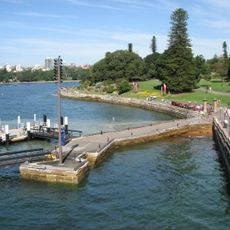
Sydney Cove
345 m
Royal Botanic Gardens, Sydney
623 m
Government House
317 m
Cadmans Cottage
582 m
Bennelong Apartments
362 m
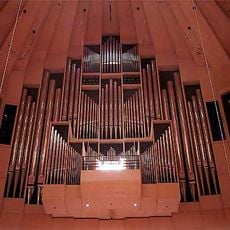
Sydney Opera House Grand Organ
0 m
Fort Macquarie
20 m
Campbell's Stores
527 m
Man O'War Steps
127 m
Justice and Police Museum
609 m
93-97 Macquarie Street, Sydney
594 m
Metcalfe Bond Stores
573 m
ASN Co building
550 m
Observer Hotel
586 m
Merchant's House
586 m
Old Coroner's Court, The Rocks
542 m
Mariners' Church
524 m
Royal Automobile Club of Australia building
566 m
Sydney Sailors' Home
549 m
Old Ambulance Station
586 m
Old Bushells Factory
544 m
Moore Stairs
418 m
Sergeant Major's Row
593 m
Harrington's Buildings
591 m
Union Bond Store
577 m
Samson's Cottage wall remains
593 m
Pylon Lookout
568 mReviews
Visited this place? Tap the stars to rate it and share your experience / photos with the community! Try now! You can cancel it anytime.
Discover hidden gems everywhere you go!
From secret cafés to breathtaking viewpoints, skip the crowded tourist spots and find places that match your style. Our app makes it easy with voice search, smart filtering, route optimization, and insider tips from travelers worldwide. Download now for the complete mobile experience.
A unique approach to discovering new places❞
— Le Figaro
All the places worth exploring❞
— France Info
A tailor-made excursion in just a few clicks❞
— 20 Minutes