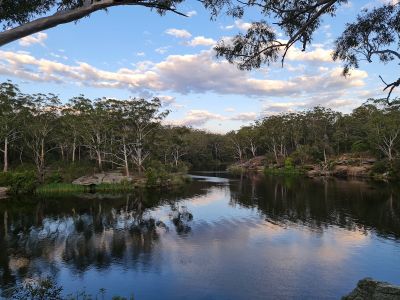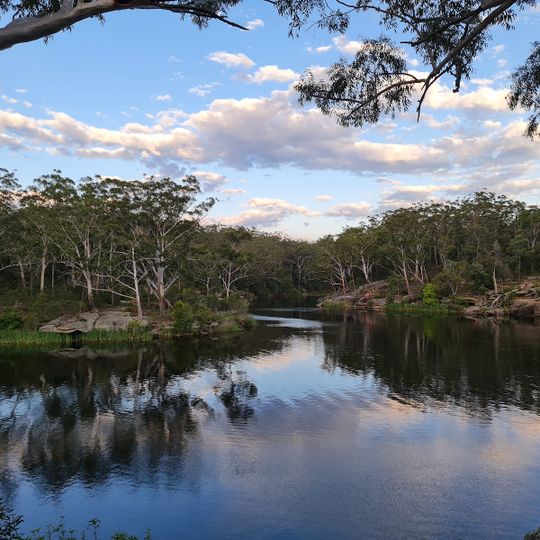
Lake Parramatta, Reservoir in North Parramatta, Australia.
Lake Parramatta is a heritage-listed man-made reservoir in North Parramatta, formed by a masonry arch dam completed in 1856 across Hunts Creek. The dam wall stands 15 metres high, 4.5 metres thick at the base and 2.4 metres at the top, with a vertical water face curving on a 73-metre radius. It holds a lake of about 10.5 hectares with a maximum capacity of 485 megalitres, ringed by a 73-hectare nature reserve.
The dam was built in 1856 and supplied the region with water for decades until 1909, when Parramatta connected to Sydney's central water system. This shift ended the reservoir's role as the main water source and changed how the area received its supply.
The land around the lake belongs to the Burramatagal and Bidjigal clans of the Darug people. Within the reserve are remnant shelters, hand stencils, flaking scars and deposits; some sites may have been flooded when the dam was built in the 1850s. A 1804 record notes the reserve used as a pleasure ground near Hunts Creek.
Entry to the reserve is from Lackey Street in North Parramatta. Swimming was permitted from 1920 to 1940, closed for years over water quality, and reopened in 2015. The 73-hectare reserve has picnic areas and bushwalking tracks; no boat rental is offered.
The surrounding nature reserve of roughly 73 hectares holds remnants of the rare original Cumberland Plain vegetation with blue-gum forests. These plant communities have become extremely scarce in the region and make the site an important refuge for native plants.
The community of curious travelers
AroundUs brings together thousands of curated places, local tips, and hidden gems, enriched daily by 94,410 contributors worldwide.