Manly ferry wharf, Ferry terminal in Sydney Harbour, Australia
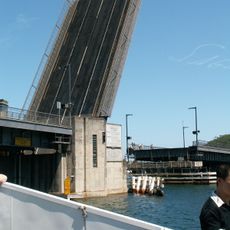
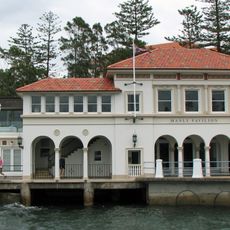
Manly Ferry Wharf is a passenger terminal featuring modernist design with a steel and timber superstructure supported by timber piers and concrete platforms along the waterfront. The facility accommodates regular ferry services and maintains a structured layout for efficient passenger flow.
The first wharf was built in 1856 by English-born merchant Henry Gilbert Smith, who promoted Manly as a seaside resort. After a fire in 1939, the Maritime Services Board engaged architect Arthur Baldwinson to design a modernist reconstruction, completed in 1941. The wharf was added to the New South Wales State Heritage Register on 18 April 2000.
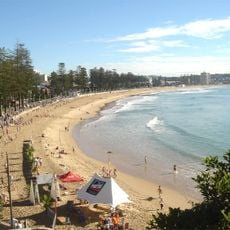
The wharf's name comes from the Manly district, which Henry Gilbert Smith promoted as a seaside resort after buying land in 1853. He planted the first Norfolk Island pines along the ocean front and built cottages, a hotel, a church, a school, pleasure grounds and swimming baths. The wharf has been the embarkation point for the Manly to Sydney ferry since the 1850s.
The main wharf handles Sydney Ferries and Manly Fast Ferry services to Circular Quay; the East Wharf, southwest of it, is treated as platform 3 and serves Captain Cook Cruises and Fantasea vessels. Bus stops for Northern Beaches routes sit on The Esplanade and Belgrave Street, a short walk from the entrance.
Marius Sestier's 1896 film of the PS Brighton arriving at the wharf, Passengers Alighting from Ferry Brighton at Manly, is counted as the first film made in Australia. It premiered at the Salon Lumière on Pitt Street, Australia's first cinema, on 27 October 1896. No copy is known to have survived.
The community of curious travelers
AroundUs brings together thousands of curated places, local tips, and hidden gems, enriched daily by 94,039 contributors worldwide.