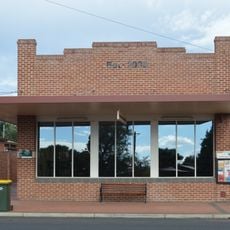
Scone Civic Theatre, Heritage-listed movie theater in Scone, Australia.
Scone Civic Theatre is a movie theater in Scone featuring Streamline Moderne design marked by smooth horizontal lines and curved forms. The building contains hundreds of seats across different levels and serves both film screenings and community performances.
Designed in 1937 by Sydney architects Guy Crick and Bruce W. Furse for Scone Theatres Pty Ltd, a company of local farmers and residents who subscribed the capital. Contractor A. F. Little began work in December 1937 and the cinema was nearly complete by 18 July 1938, costing about A£14,000. It opened on 27 July 1938 with a charity gala for the Scott Memorial Hospital, screening Stolen Heaven and A Bride for Henry.
The name Civic came from the townspeople who funded it: Scone Theatres Pty Ltd was formed in 1937 by district farmers and residents, and chairman A. C. Ingham said the capital had been subscribed by the citizens. The opening gala on 27 July 1938 was a charity benefit for Scott Memorial Hospital, with two films, Stolen Heaven and A Bride for Henry.
The theatre stands at 144 Kelly Street in Scone, on the New South Wales State Heritage Register since 21 February 2003. It is privately owned, so visitors see the building from the street rather than touring the auditorium. The 1954 fire damaged the stage, screen, curtains, sound equipment, ceiling and roof, and the venue reopened two days later.
The Civic Theatre was among the first cinemas in New South Wales to have full air-conditioning, a detail praised in 1938; the design and specifications for the system are held at NSW State Records under Licence No. 554. On 22 September 1954 a fire blamed on children smoking in the pit beneath the stage damaged the stage, screen, curtains, sound equipment, ceiling and roof, estimated at £5,000; a temporary canvas roof went up and the cinema reopened two days later.
The community of curious travelers
AroundUs brings together thousands of curated places, local tips, and hidden gems, enriched daily by 93,474 contributors worldwide.